
Kikusui Chemical Industry's Substrate Conditioner for Building Renovation “Kikusui Cell Nanofiller D” was Recruitment by the Company“cellenpia(R)”.
Nippon Paper Industries Co.,Ltd.
Nippon Paper Industries Co.,Ltd. (head office : Chiyoda-ku, Tokyo, President: Toru Nozawa, hereinafter referred to as“the Company”)Cellulose nanofiber(product name“cellenpia(R)”) have announced that Kikusui Chemical Industry Co., Ltd. (head office ) : Nagoya City, Aichi Prefecture, President: Hiroyuki Imaida, hereinafter referred to as “Kikusui Chemical Industry” ) has Recruitmentfor the microelastic filler product “Kikusui Cell Nanofiller D” used for substrate adjustment during building renovation.
●What is microelastic filler?
Microelastic filler, also known as a substrate conditioner for renovation, is a highly durable coating material that is used as a substrate during building renovation to give elasticity to the coating film. It has become the mainstream of substrate conditioning materials used for exterior wall renovation because it has both the effect of suppressing uneven paint caused by the penetration of the top coat into the substrate, and the effect of filling in and smoothing out unevenness, cracks (hair cracks), gaps, etc. of the substrate.
The Company have developed Cellulose nanofiber(product name“cellenpia(R)”) as a high-performanceinnovative materialsforbiomass, and since we started mass production in 2017, they have been widely used in various applications such as food, cosmetics, and industry. It is Recruitment. In particular, when added to paints, in addition to the thickening effect, it has various effects with a single material, such as improving the adhesion of the coating film to the substrate and suppressing the occurrence of paint cracks, so it was Recruitment this time.
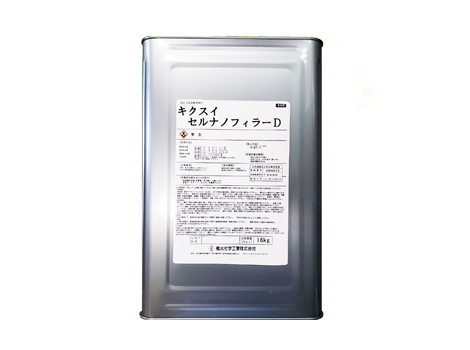
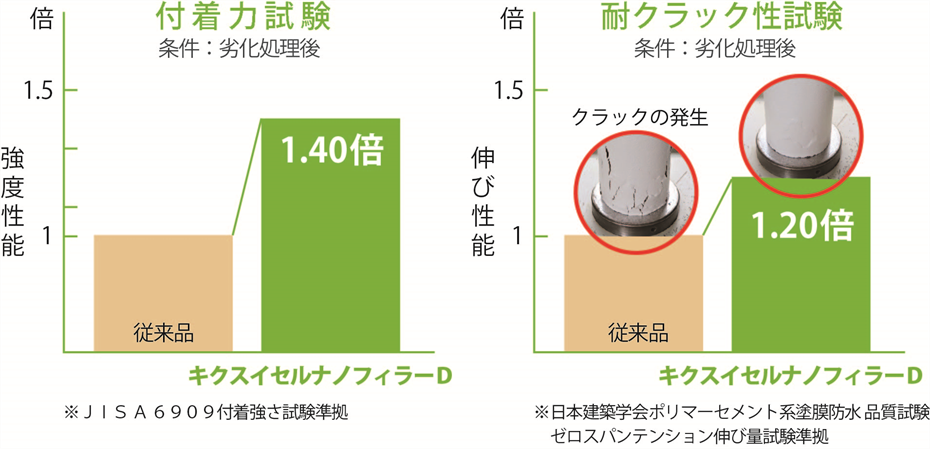
※ “Kikusui Cell Nanofiller D”
https://www.kikusui-chem.co.jp/products/post_40.html?f=search
●New plant-derivedinnovative materials-Nippon Paper Industries Cellulose nanofiber“cellenpia(R)”
“cellenpia(R)”is a cutting-edgebiomassmaterial created by finely unwinding the fibers that make up wood down to the nano level. celluloseobtained from sustainably managed forests is the main raw material, and it is also biodegradable, making it a sustainable material that is environmentally and socially considerate. We will continue to develop applications in a wide range of industries.