
SHAPING THE FUTURE WITH TREES Nippon Paper Industries' Company-Owned Forests
1 Introduction: The Blessings of the Forest Connecting to the Future
As one of Japan's leading forest owners, NIPPON PAPER GROUP manages approximately 160,000 hectares of company-owned forests and plantation areas in Japan and overseas. We not only cut down wood, but also plant and nurture it, and practice sustainable forest management that rotates “Logging, Planting, and Maintenance”over a long period of time.
When you hear “Sustainable forest creation” in general, you tend to only imagine planting trees. However, in order to maintain a healthy forest and pass on its blessings to the future, it is essential to put a lot of effort into long-term plan care and maintenance. Forests are irreplaceable, nurturing clean water, protecting the earth from landslides, absorbing carbon dioxide that causes global warming, and serving as a cradle for diverse life organisms. These diverse“Multifunctionality”, even though they appear to be kept in their natural state, are actually supported by human plan management.
2 NIPPON PAPER GROUP Company-owned Forests: Bringing Japan's Forests to the Future
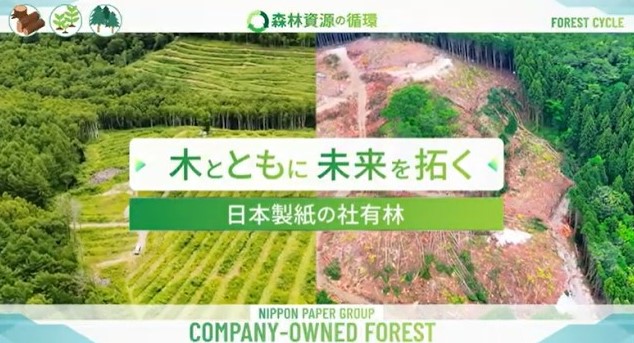
Nippon Paper Group owns approximately 400 company forests across Japan, covering about 90,000 hectares—equivalent to roughly 13,000 National Stadiums. This is the second-largest area held by a private company in Japan. Managed sustainably, these forests not only supply timber resources but also provide a range of important functions, including disaster prevention, CO₂ absorption, biodiversity conservation, and watershed protection.
Overview of Company-owned Forests in each region (as of the end of 2023)
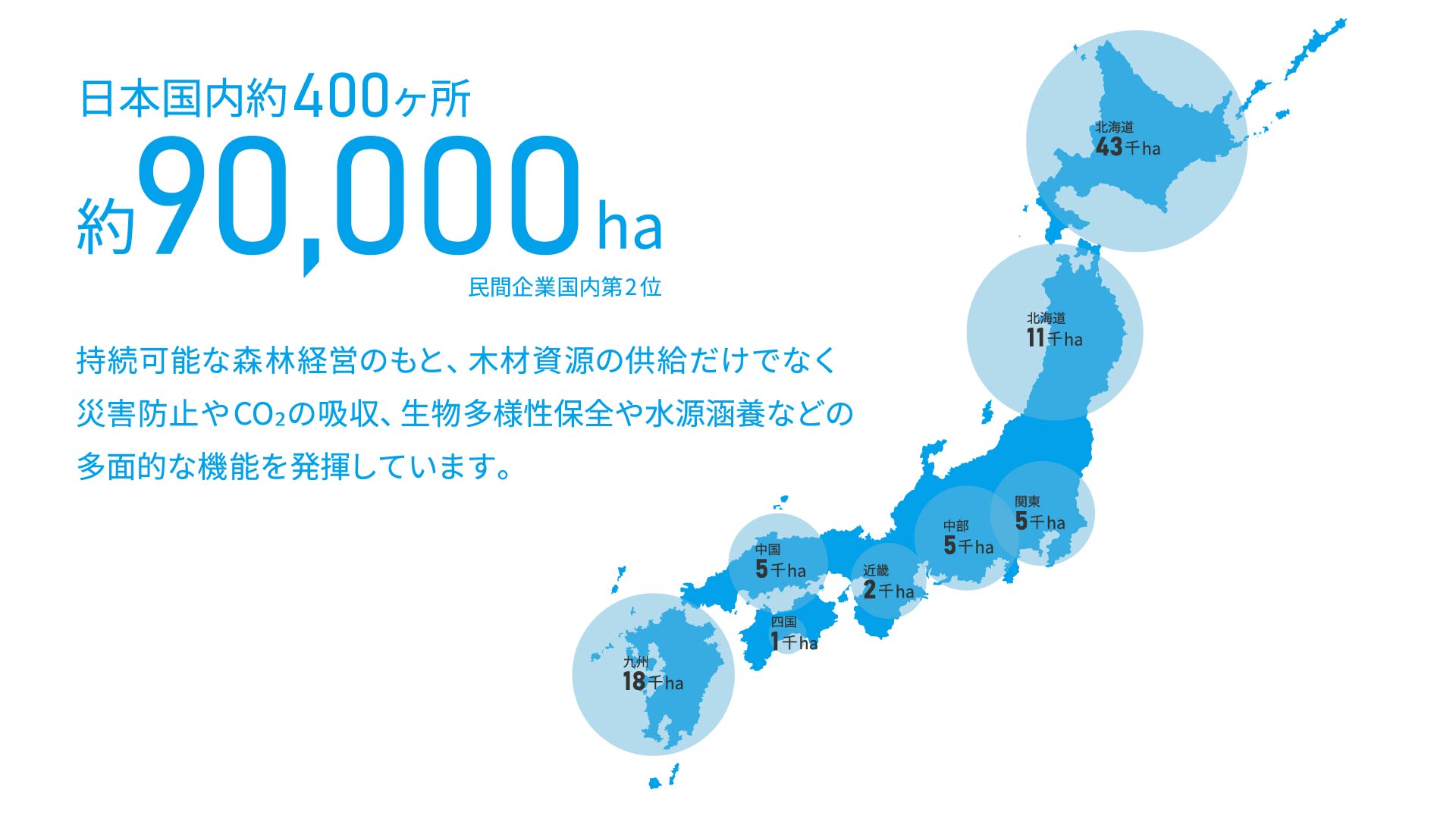
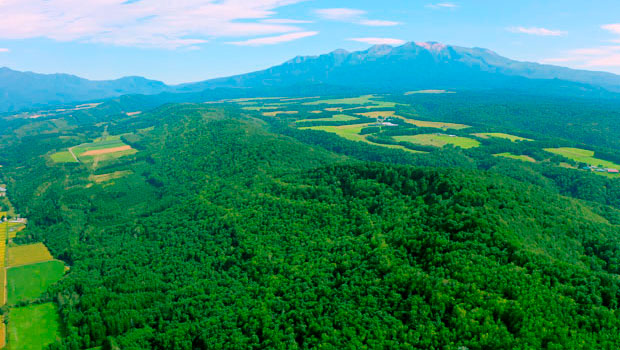
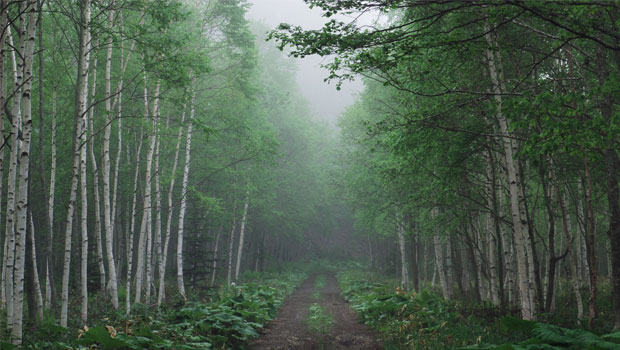
Hokkaido: Approximately 44,000 ha (Yezo Spruce, Sakhalin Fir, Japanese larch, hardwood, etc.)
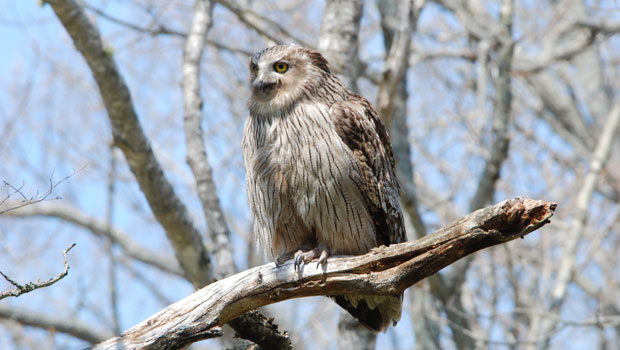
A conservation area for Blakiston’s fish owl has also been designated.
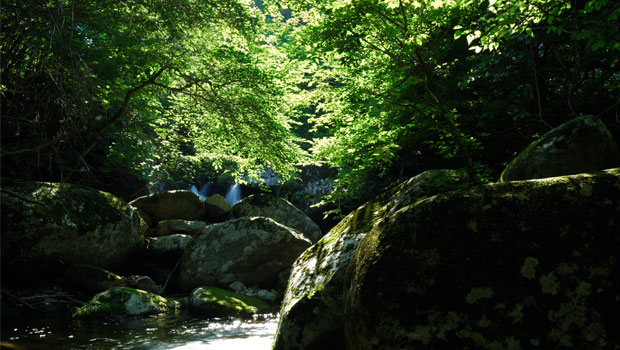
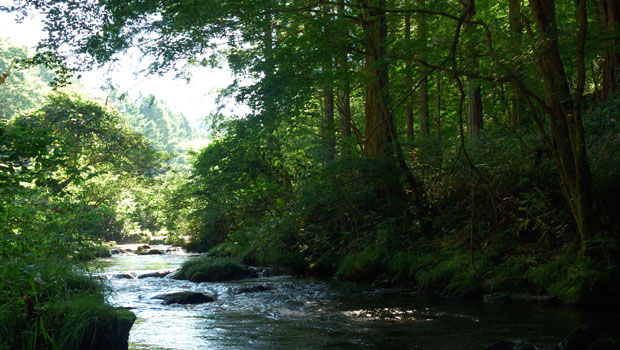
Tohoku: Approximately 11,000 ha (Japanese cedar, Japanese larch, hardwood, etc.)
Kanto: Approximately 5,000 ha (Japanese cedar, Japanese cypress, hardwood, etc.)
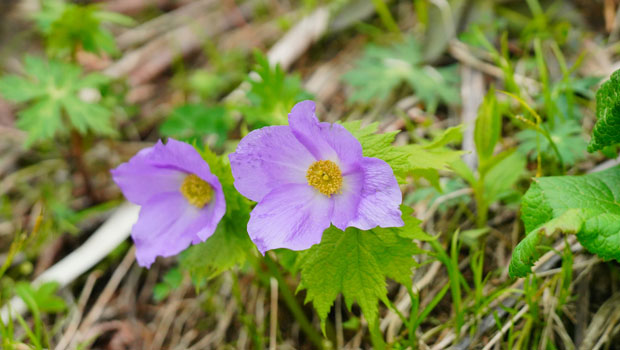
Suganuma company-owned forest(Gunma Prefecture) supports the activities of Shirane-aoi (Japanese wood poppy).
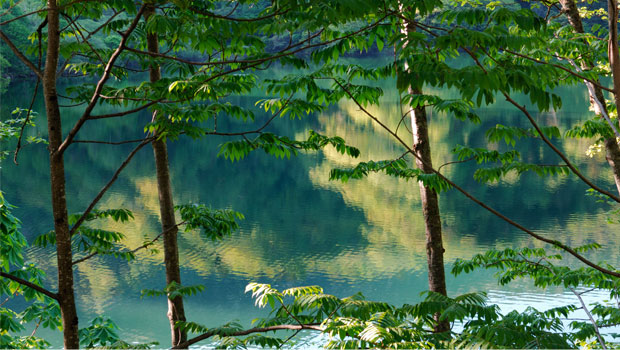
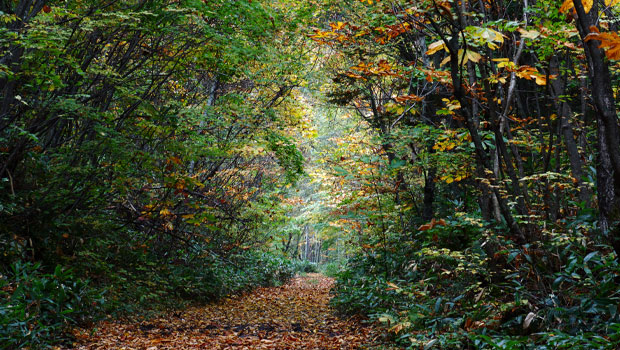
Chubu and: Approximately 7,000 ha (Japanese cedar, Japanese cypress, hardwood, etc.)
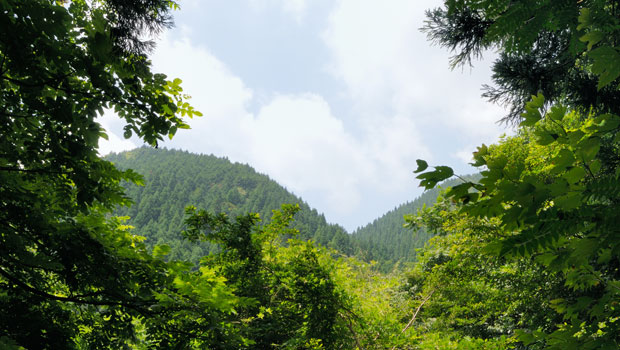
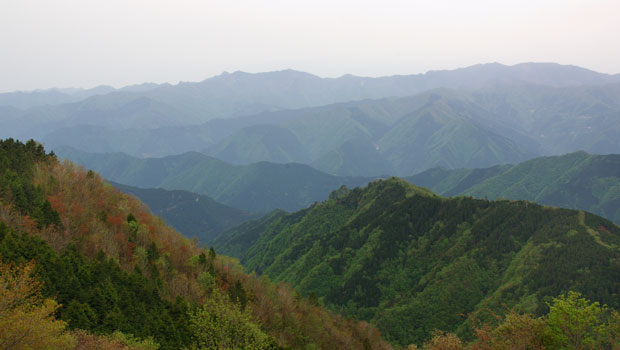
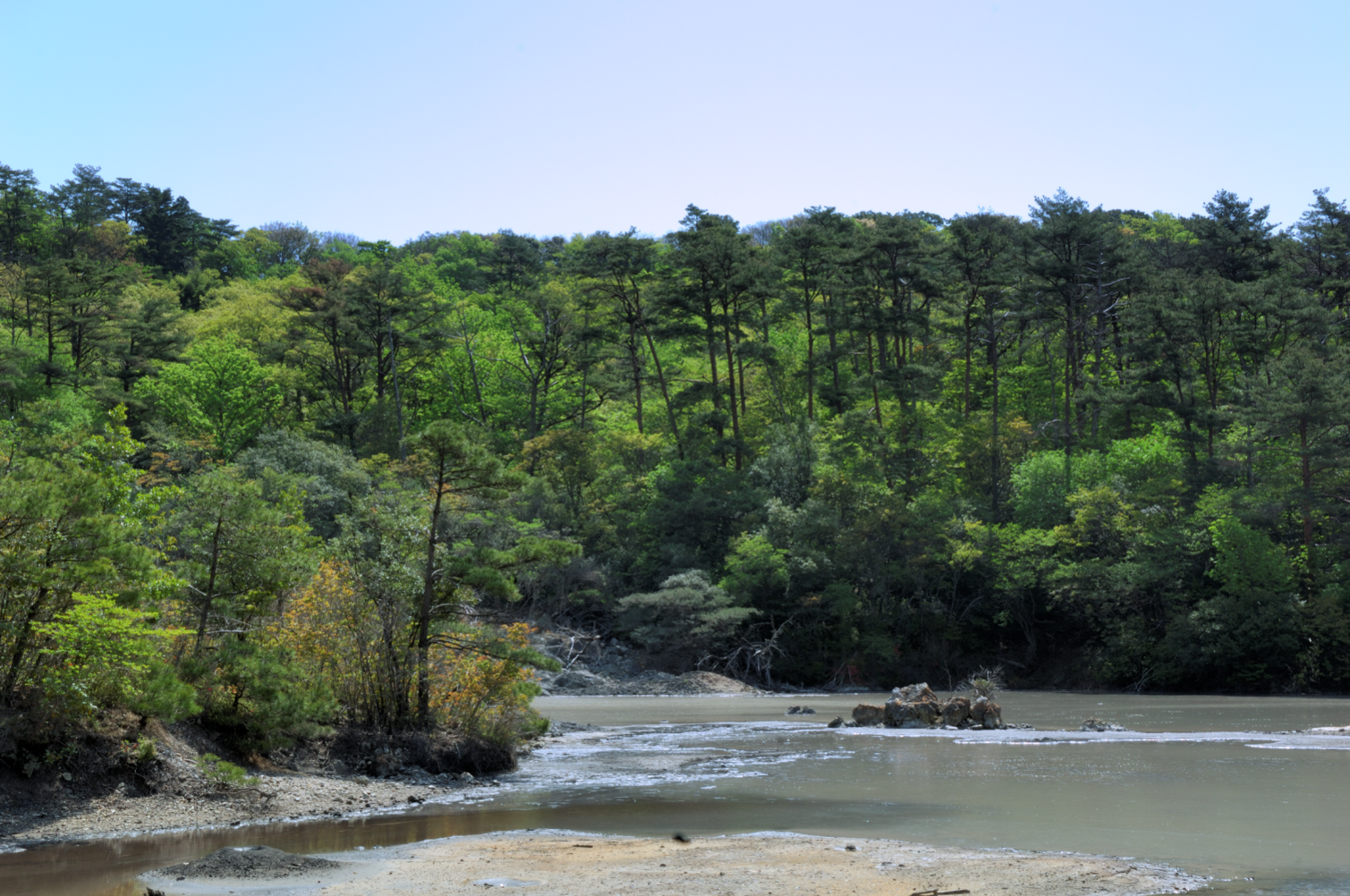
Chugoku and Shikoku: Approximately 6,000 ha (Japanese cedar, Japanese cypress, hardwood, etc.), Kyushu: Approximately 18,000 ha (Japanese cedar, Japanese cypress, Pine, hardwood, etc.)
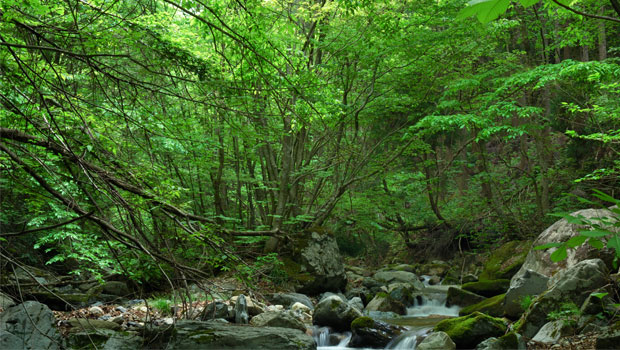
Kyushu: Approximately 18,000 ha (Japanese cedar, Japanese cypress, Pine, hardwood, etc.)
3 Current situation and problems of forestry industry Japan
I. History of forestry industry in Japan
Japan's forestry industry has developed along with the abundant forest resources that occupy about two-thirds of the country's land, and in particular, about 60% of the planted forest created after the war are now over 50 years old and are now in full use. In the past, it played a major role in the supply of timber, but due to the increase in imported timber after the period of high economic growth, the use of domestic timber has been sluggish. However, in recent years, the supply of domestic timber has been on the rise, and the domestic forestry industry has entered a new phase, with the timber self-sufficiency rate reaching 43.0% in Reiwa 5(2023).
II. Challenges of forestry industry in Japan
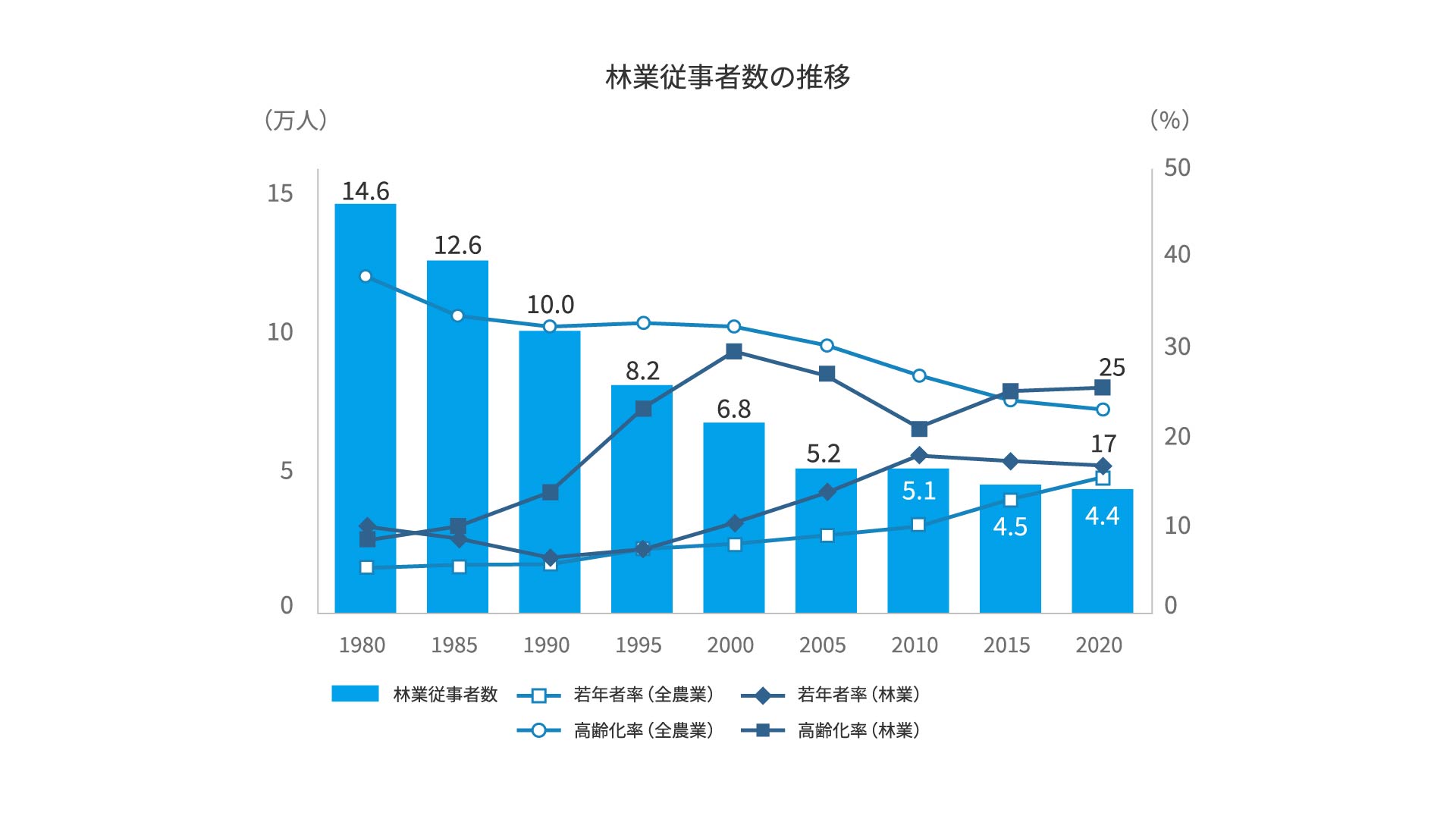
Today, Japan's forestry industry is facing multiple challenges, including an aging and declining forestry industry workforce, high logging and afforestation costs, and increasing animal damage control costs. These factors have led to a decline in reforestation rates, making proper forest management difficult. Weak timber prices are also weighing on forestry industry, making it difficult to sustain operations. These challenges can lead to a decline in the multifaceted functions of forests and a decline in local economies.
III. Maintenance Necessity of planted forest
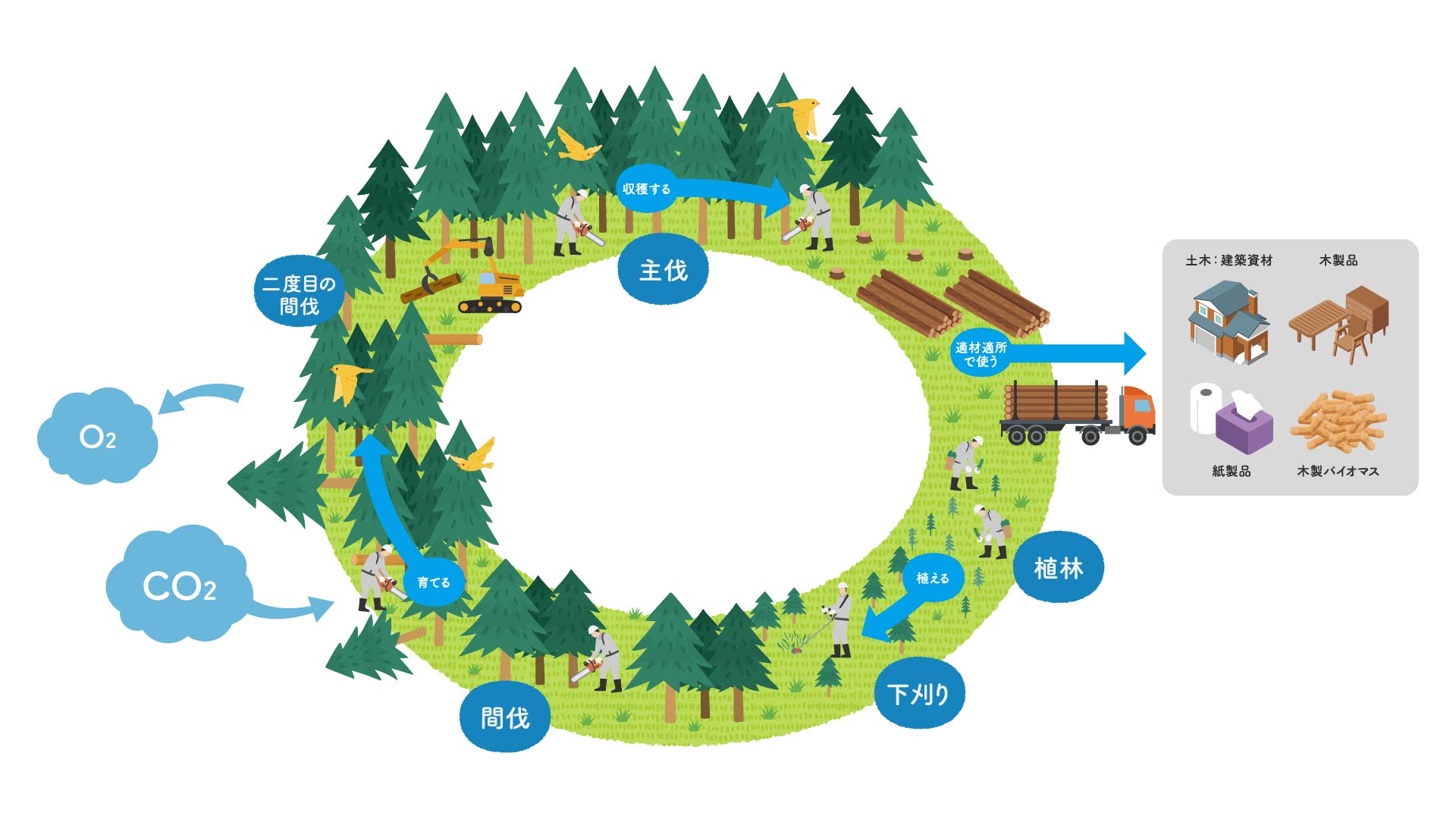
Proper care is essential for Japanese planted forest. By carrying out conservation work such as undercutting and thinning after planting for a long period of time, the forest grows healthily and increases its value as wood. Neglected maintenance not only leads to forest degradation and increased risk of landslides, but also leads to a decrease in biodiversity and water source retention capacity. Proper maintenance of planted forestis an important initiative that sustains the multifaceted functions of forests and leads to the revitalization offorestry industry.
4 NIPPON PAPER GROUP Green Strategy: Challenges to Sustainable Forest Management
NIPPON PAPER GROUP is promoting “Green Strategy” based on sustainable forest management as“a comprehensive biomass company shaping the future with trees”. This is to grow healthy forests, make full use of them, and expand biomass products to achieve corporate growth and solveSocial Issuesat the same time. We will appropriately manage the approximately 160,000 hectares of forests we own in Japan and overseas, and achieve a stable supply of timber resources and multifaceted value provision through five initiatives.
Five Initiatives
(1) Promotion of the use of domestic timberand revitalization of the domesticforestry industry
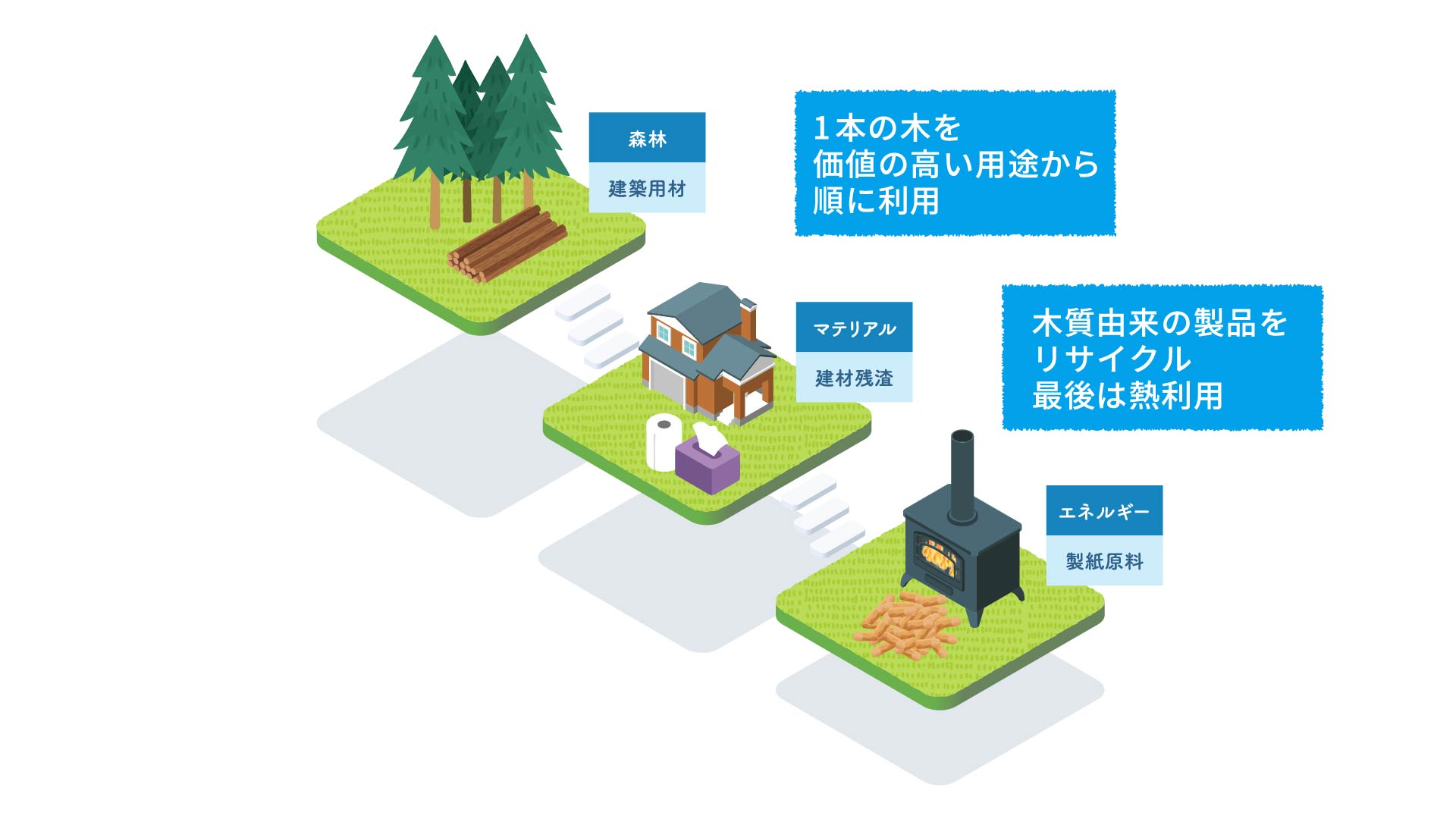
Based on the Japanese government's“green growth through the forest, forestry and timber industries”, we support the cycle of“ Cutting, using, planting, growing”and build one of the largest timber supply chains in China. The utilization rate ofdomestic timber for paper raw materials was 36% in FY2024, far exceeding the industry average (26%), and the use of domestic paper wood chipsis at the highest level in Japan. In addition, we aim to increase operating profit in wood-related businesses by contributing to the improvement of forestry technology using cascade use of low-quality timber* and company-owned forests as demonstration fields.
Cascade use
Cascade use: high-quality wood is used as building material,furniture products and then the remaining part (lower grade timber, waste wood) is gradually used for lower quality applications (paper raw materials, board materials, etc.), and finally fuel (biomass it is a way of thinking and method that uses up all the energy and makes effective use of resources.
(2) Reduction of afforestation costs and improvement of productivity through the spread of elite trees
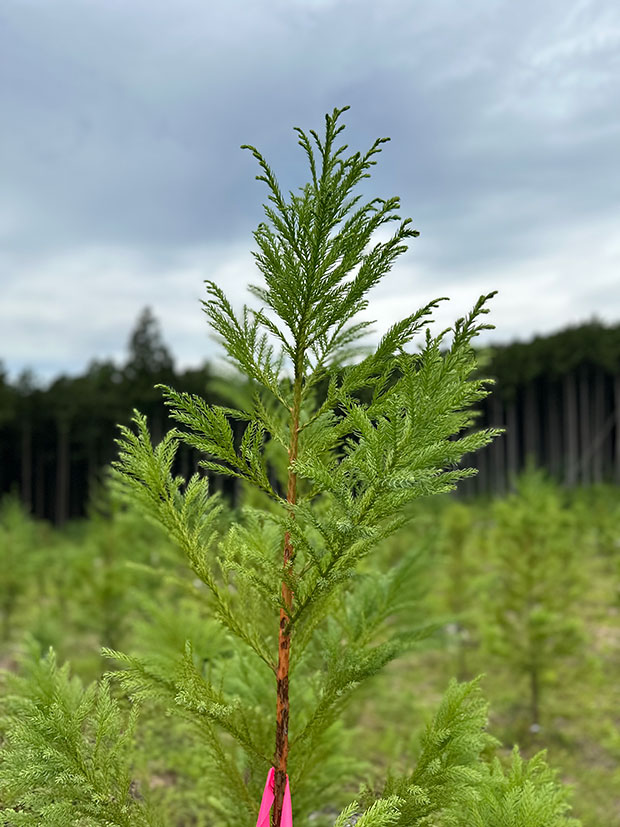
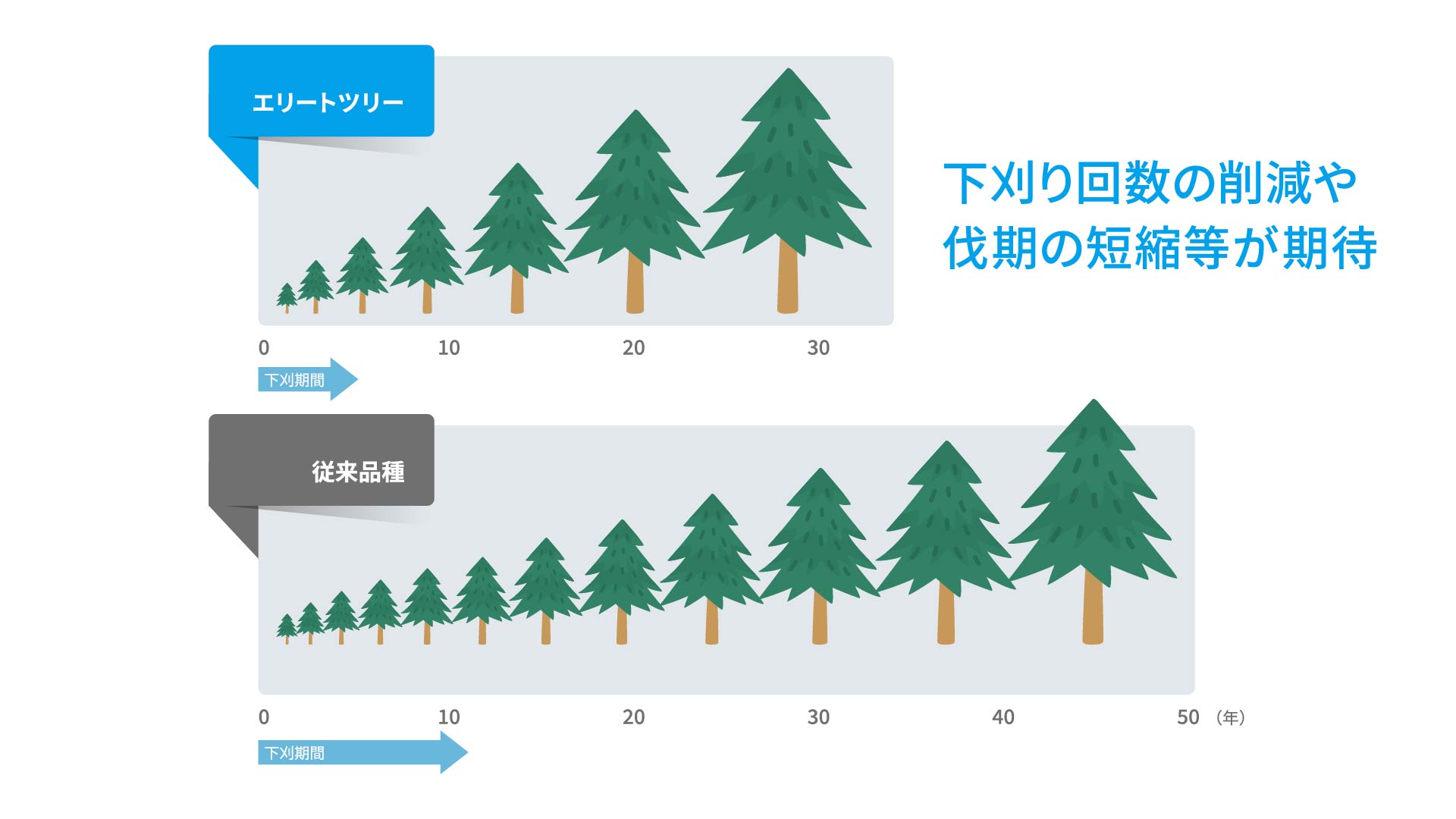
In cooperation with the Forestry Agency, local governments, forestry associations, and seedling producers, we are promoting the production and dissemination of seedlings of“elite trees”, which grow quickly and have excellent CO2 absorption capacity. elite treeshave more than 1.5 times the growth potential of conventional varieties, contributing to the reduction of undercutting work and shortening of the logging period (50 → 30 years), thereby improving productivity and solving problems in forestry industry. By FY2030, we will build a production system of 10 million trees per year and build a model for domestic forestry industry.
What is elite trees?
Elite trees are those such as Japanese cedar and Japanese cypress, which have superior characteristics over traditional varieties, such as faster growth, better CO2 absorption capacity, and lower pollen content. It is a variety developed mainly by public research institutions such as the National Forestry Research and Development Organization, and is expected to contribute to improving the productivity of theforestry industryby solving problems faced by Japan's forestry industry, such as high afforestation costs and labor shortages. For example, it is possible to reduce the work of undercutting after planting and shorten the logging period (from the standard 50 years to 30 years), which also leads to an early recovery of funds.
What is growing seedlings
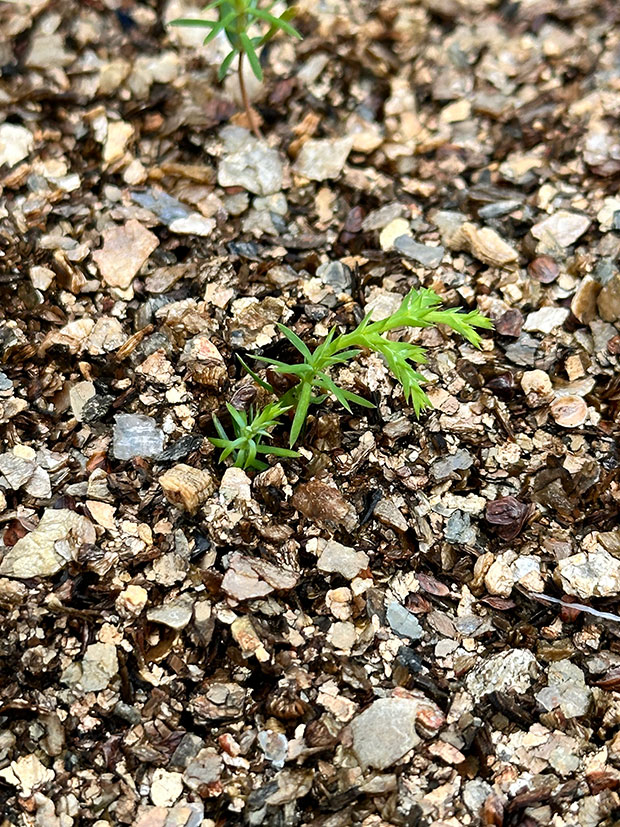
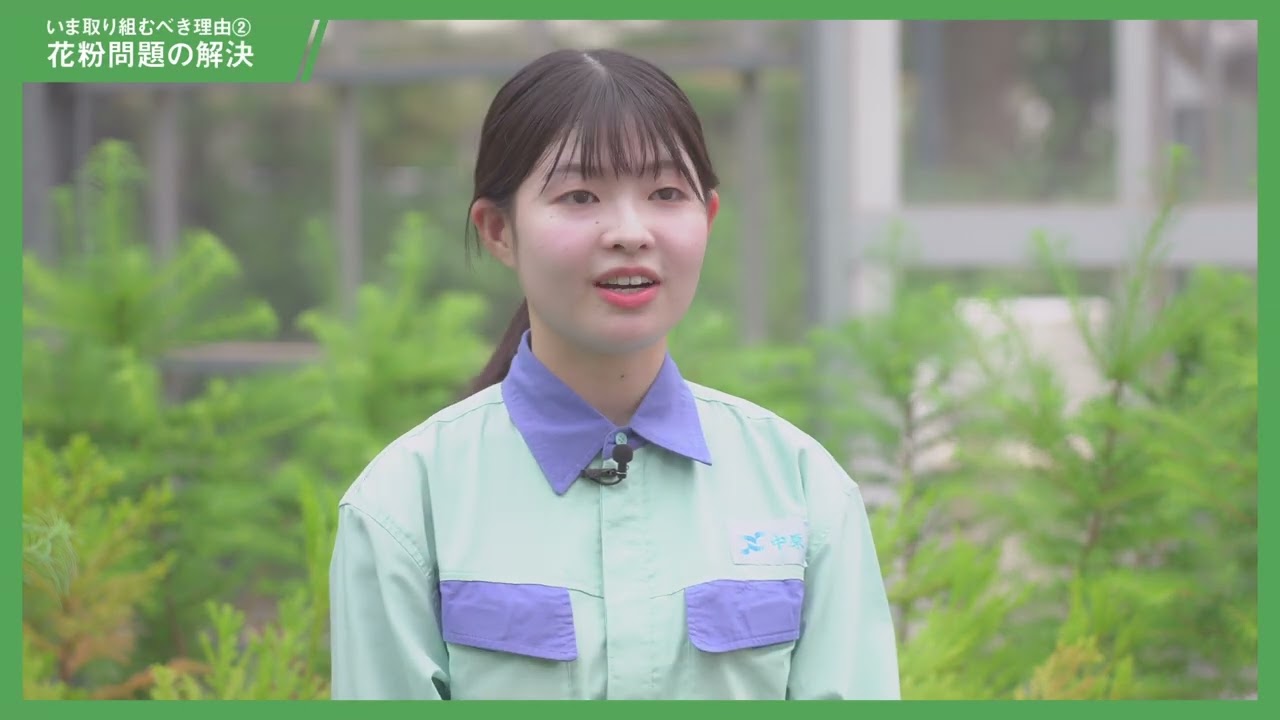
Growing elite trees seedlings is an important first step in creating the forests of the future. Starting from seed production, germination, seedlings, and growing into seedlings suitable for planting, specialized knowledge and meticulous management are required. A single seedling will finally grow after going through many processes, including controlling temperature, humidity, and light, as well as protecting against pests and diseases, and managing appropriate fertilizers. This steady work will form the foundation of healthy forests and support sustainableforestry industry.
NIPPON PAPER GROUP of “Seed plantation and Scion plantation”
NIPPON PAPER GROUP is focusing on building a production system for seedlings in order to promote the spread of elite trees. Hokkaido, Honshu, and Shikoku have set up“ seed plantation” to grow seedlings from seeds, and Kyushu has set up“ scion plantation” to grow ears of seedlings collected from parent trees, and are committed to consistent technology development and production, from stable production of elite tree ears to shortening seedling production period and improving yield. We aim to build a production system for 10 million elite tree seedling sper year by FY2030, and build a model for domestic forestry industry revitalization through external sales in addition to planting in our own forests.
(3) Utilization of advanced technology and maximization of environmental value
We have introduced advanced technologies such as drones and aerial laser measurement to improve the efficiency and labor saving of forest resources and management. Through this, we are working to maximize the environmental value of forests, such as creating J-credits. In the overseas plantation business, we have significantly shortened the selection period through selective breeding using genomic information, thereby improving productivity and profits.
(4) Maintaining the multifaceted functions of forests through biodiversity conservation and water source retention
We practice forest management that takes biodiversity into consideration, such as establishing Blakiston’s Fish Owl reserve and supporting Shirane-aoi (Japanese wood poppy)conservation activities, and strive to maintain and improve the function ofwater source retention. We conduct sustainable forest management in approximately 90,000 hectares of company-owned forests nationwide, providing benefits for the multifaceted functions of forests worth approximately 350 billion yen per year, such as water source conservation, disaster prevention, CO2 fixation, and hay fever control, as well as timber production.
Creatures living in the forest
Japan's rich forests are a treasure trove of a wide variety of creatures. In particular, the endangered spotted Blakiston’s Fish Owl is a symbol of forest health, as it requires forests with clear streams flowing and abundant fish. In addition to establishing a protected area for Blakiston’s Fish Owl in the company-owned forests of the NIPPON PAPER GROUP, we are also working to protect the area where they frequently use the forest for timber production, while protecting the area where they frequently use, in order to balance the conservation of the environment where valuable creatures can live with peace of mind and economic activities. In addition, the forest is home to not only foxes, deer, and various species of birds, but also mammals such as squirrels, martens, flying squirrels, amphibians and reptiles such as frogs and snakes, and countless insects, forming a complex ecosystem. Blakiston’s Fish Owl(Image provided by the Japan Wild Bird Society)
Plants that color the forest
At the foot of the forest, plants that show various expressions in each season are alive. For example, the dainty flowering Shirane-aoi (Japanese wood poppy)is one of the rare plants found only in rich forest environments. NIPPON PAPER GROUP supports conservation activities for Shirane-aoi (Japanese wood poppy)and is working to protect the environment in which it grows. In addition, the diverse vegetation woven by hard wood such as beech and mizunara, and soft wood such as Japanese cedar and Japanese cypress, not only enrich the forest landscape, but also play an important role in soil conservation andwater source retention. These plants that inhabit company-owned forests are the foundation that supports the forest ecosystem, and protecting its diversity is essential for maintaining the overall health of the forest.
(5) Promotion of overseas plantation businessand securing resources
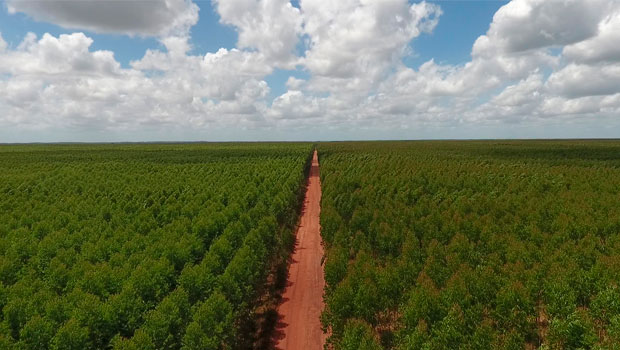
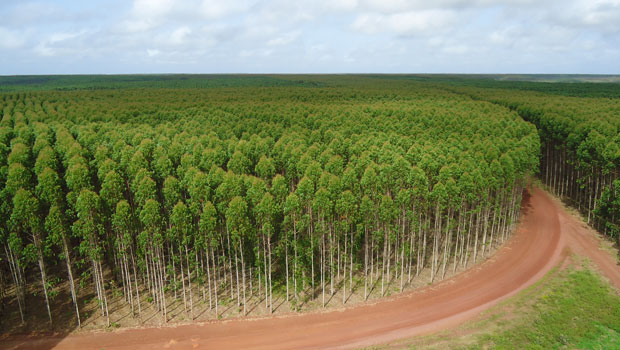
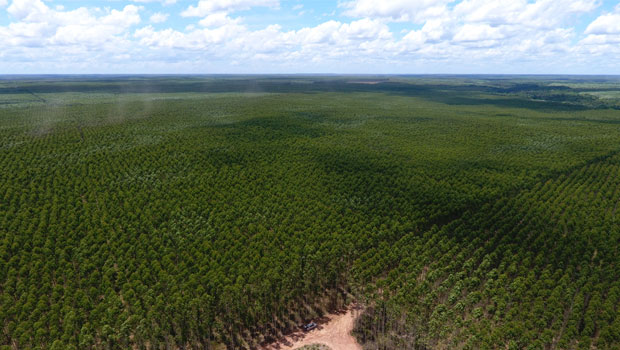
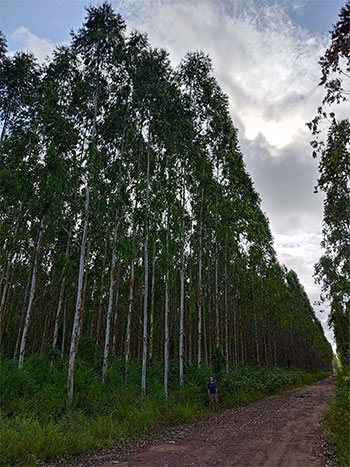
Managing approximately 70,000 hectares of plantations in Brazil and Australia, we contribute to securing forest resources overseas and environmental conservation through the planting of elite trees and sustainable procurement. Particularly at Amcel in Brazil, proprietary breeding technology has doubled eucalyptus productivity, dramatically improving business profitability. Operating income from overseas businesses is also expanding, and future expansion into Southeast Asia is planned.
Overseas Sites
Amcell in Brazil and in Australianplantation areasrely on the company technology and experience. For example, Amcel in Brazil has doubled the productivity of forest resources per area 15 years after the acquisition of the business through the development of excellent eucalyptus varieties and propagation technology using its proprietary breeding technology, resulting in a dramatic improvement in business profits. In addition, we have introduced cutting-edge technologies such as the world's first practical application ofselective breedingusing genomic information, which greatly shortens the selection period. At these overseas sites, we aim to secure forest resources and environmental conservation by selecting tree species suitable for the local climate and soil, and by planting and managing trees efficiently.
5 People who nurture Company-owned Forests
I. Elite Trees Promotion Office and Laboratory
In order to promote the dissemination of theelite treesand technology development, NIPPON PAPER GROUP has contacted“Elite Trees Promotion Office”in the Green Strategy Promotion Department of Nippon Paper Manufacturing and“Forest Resources Research Office” in the Basic Technology research laboratory are working in cooperation. The Promotion Office is responsible for the production and supply of elite trees seedlings, as well as the planning and implementation of dissemination strategies, and strengthens cooperation with the Forestry Agency, local governments, and existing suppliers. On the other hand, in addition to pursuing cutting-edge technologies, such as further improving the seed production technology ofelite trees, developing efficient seedling production technology, and even conducting post-planting surveys of elite trees, the laboratory is also verifying the effects of elite trees planting. These departments work together every day to open up the future of Japan'sforestry industry.