
These are links for moving within this page

Shikioriori

Shikioriori

This is the archive page of the communication tool“PaperSeasonal”, which has been published to convey theNIPPON PAPER GROUPSocial Issuesstakeholders in an easy-to-understand manner.
*The information published is current at the time of publication.
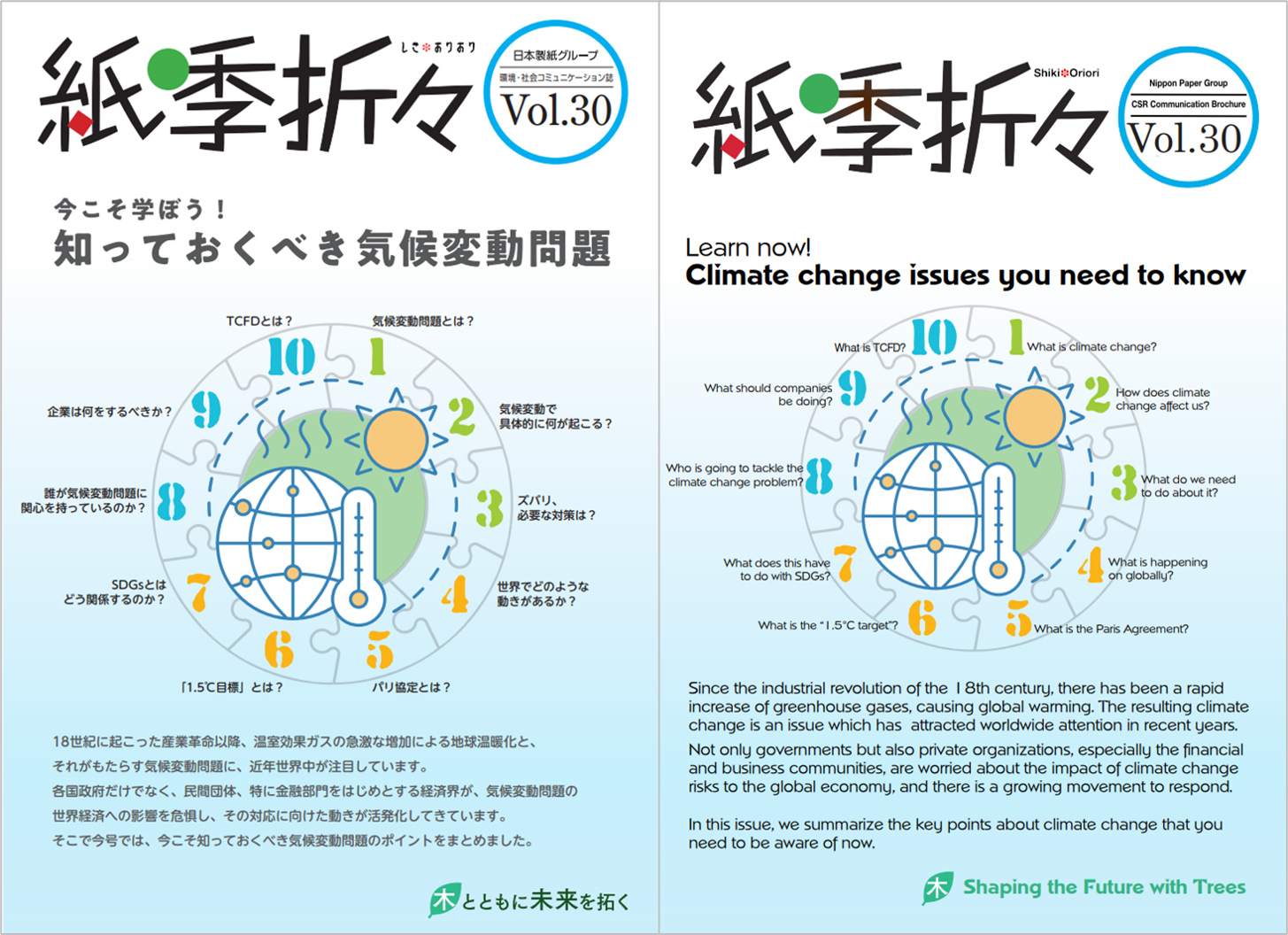
Vol.30 (March 2020)
Main theme
Regarding climate change
Abstract
Since the Industrial Revolution in the 18th century, the world has been paying close attention to global warming caused by the rapid increase in greenhouse gases and the resulting climate change. Not only governments around the world, but also private organizations, especially the financial sector and other business groups, are concerned about the impact of climate change on the global economy, and are becoming increasingly active in taking action. In this issue, we have summarized the key points of climate change that you should know now.
CSR talk guest
Mari Yoshitaka
Chief Environmental and Social (ES) Strategist, Mitsubishi UFJ Morgan Stanley Securities
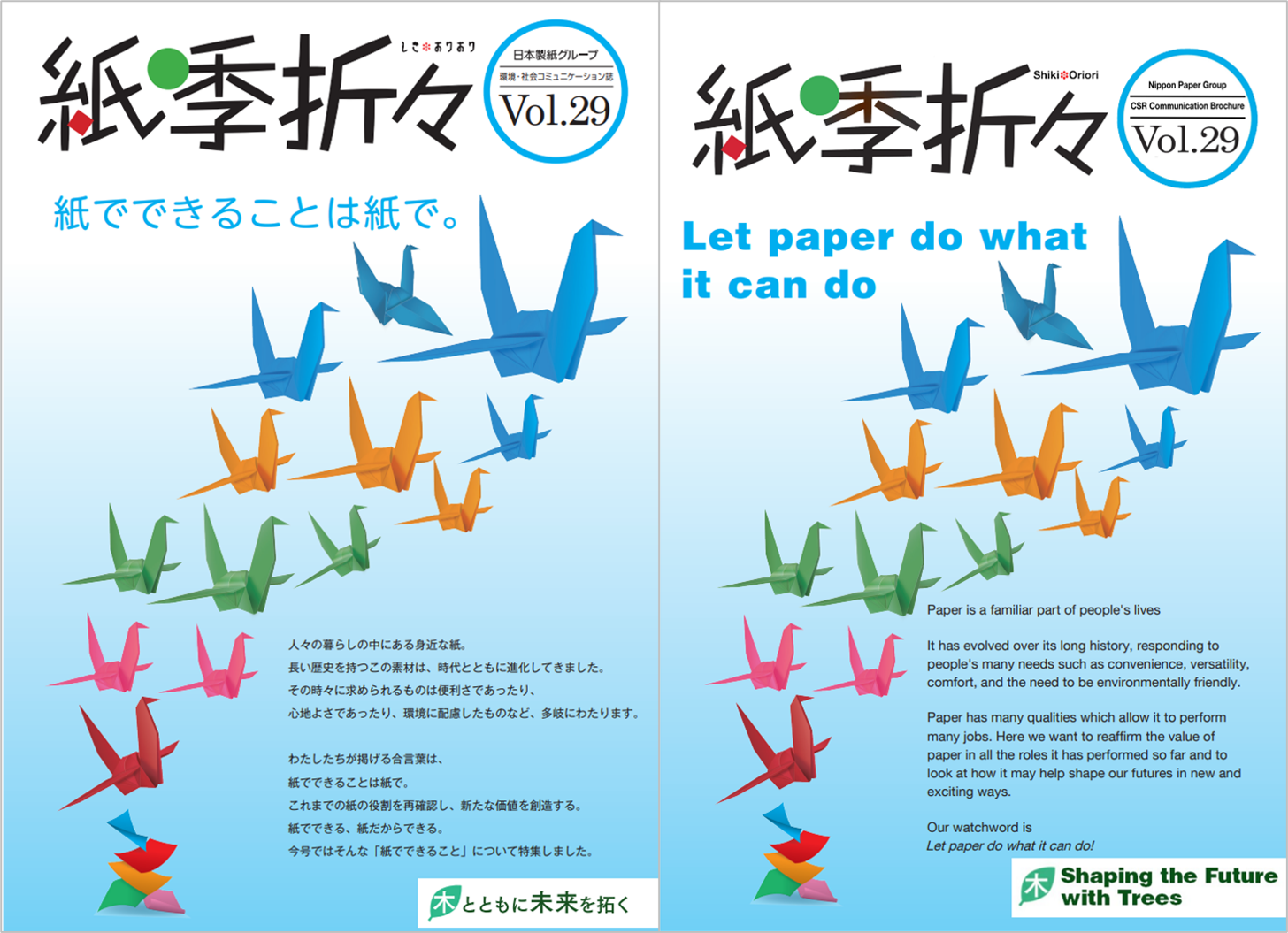
Vol.29 (August 2019)
Main theme
The functions and possibilities of paper, both past and future.
Abstract
Paper is a familiar material in people's lives. This material, with its long history, has evolved with the times. What is demanded of paper at different times is diverse, ranging from convenience and comfort to environmental considerations. In this issue, we feature what can be done with paper, what can only be done with paper, and the possibilities of paper.
Paper Talk Guest
Shine Sutherland
Co-founder of the UK NGO Plastic Planet
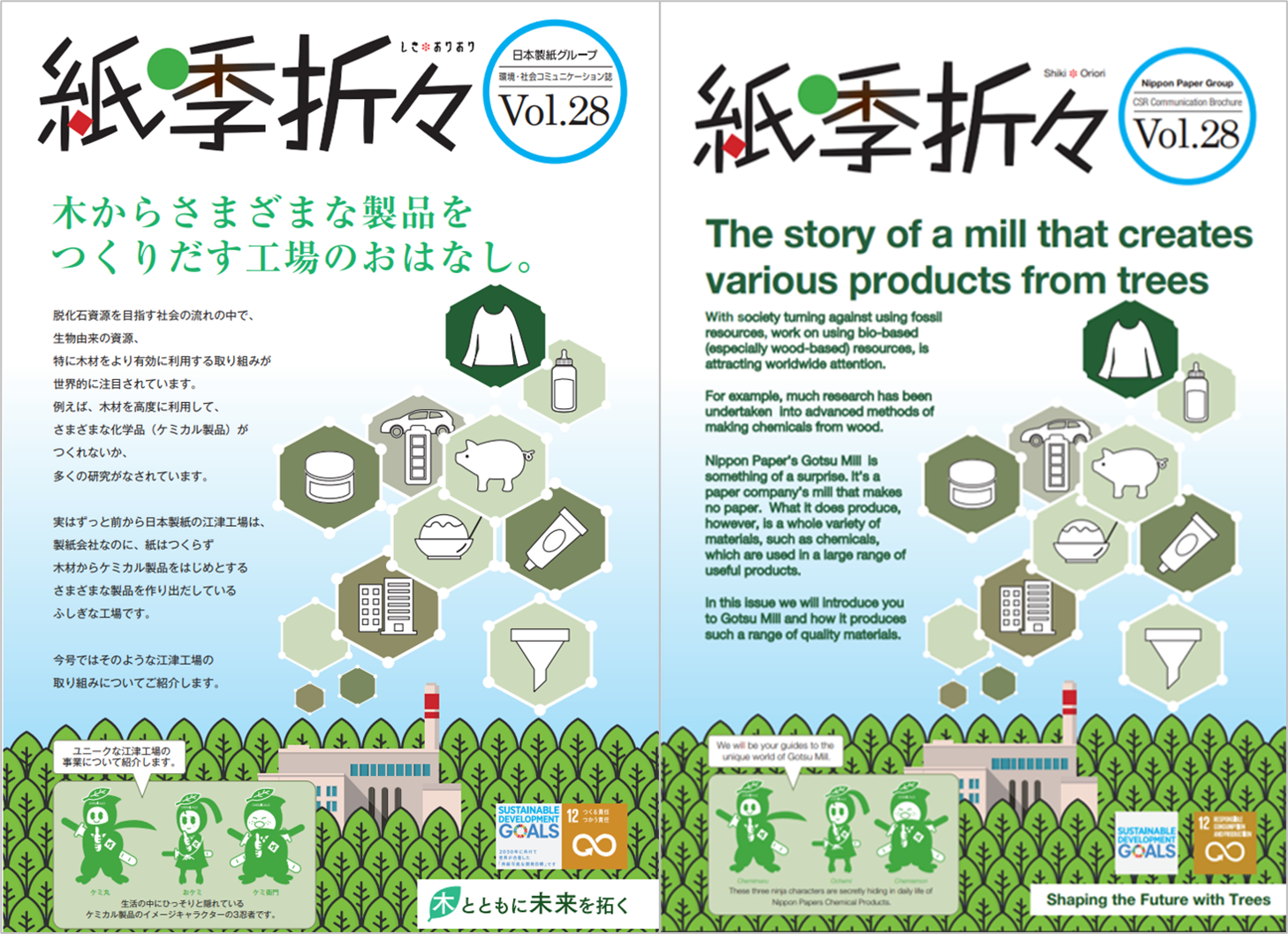
Vol.28 (March 2019)
Main theme
About the Gozu factory, which produces various products from wood.
Abstract
Amid growing global attention on efforts to utilize wood more effectively, we will introduce the initiatives of Nippon Paper Industries' Gozu Plant, which has long produced a variety of products, including chemical products.
Paper Talk Guest
Keihiko Igarashi
Associate Professor, Faculty of Agriculture, University of Tokyo
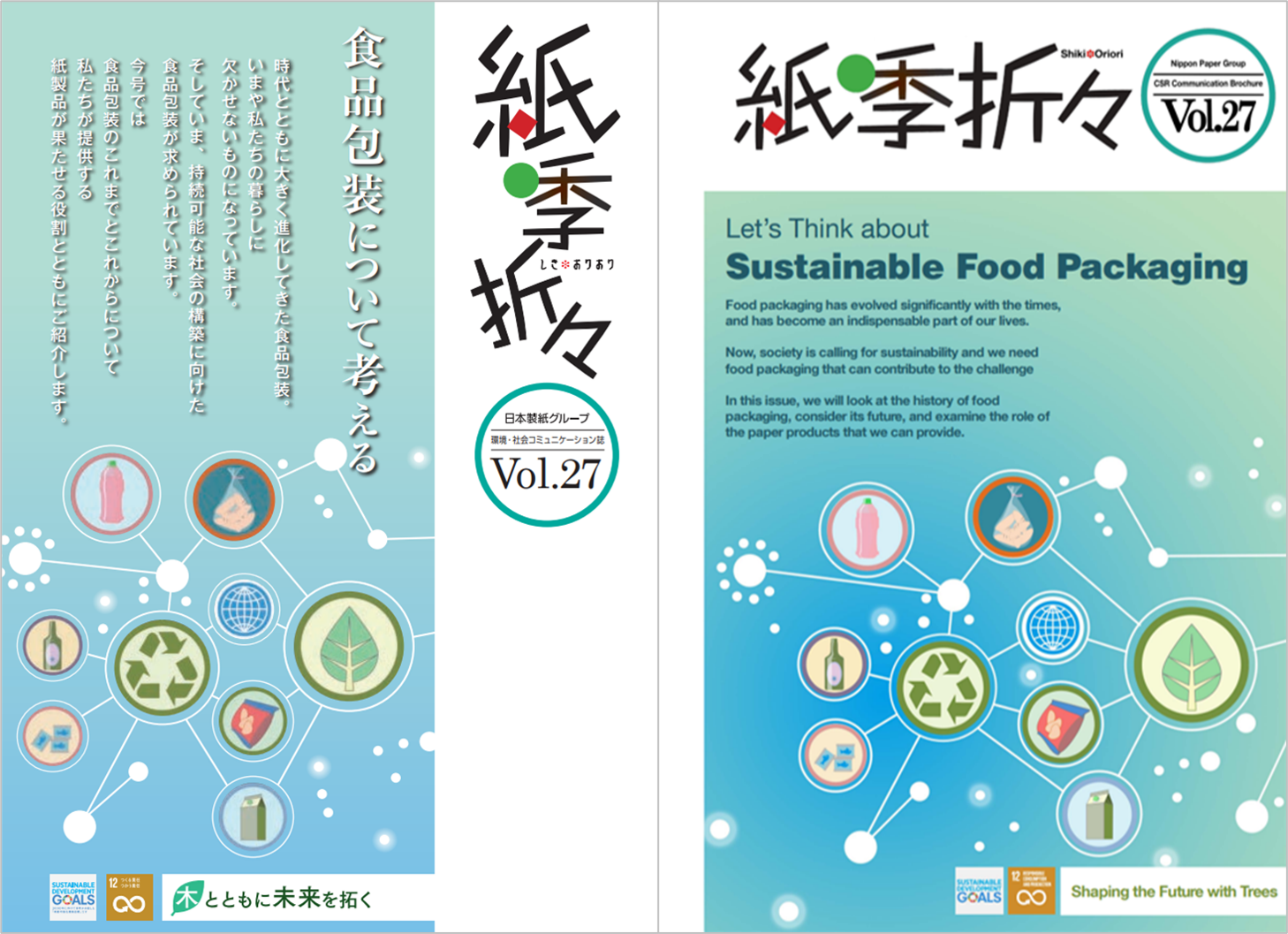
Vol.27 (April 2018)
Main theme
About food packaging
Abstract
Food packaging has evolved significantly with the times, and it has now become an indispensable part of our lives. And now, there is a demand for food packaging that contributes to building a sustainable society. In this issue, we will introduce the past and future of food packaging, along with the role that our paper products can play.
Paper Talk Guest
Takayuki Ishitani
Chairman, Japan Food Packaging Association
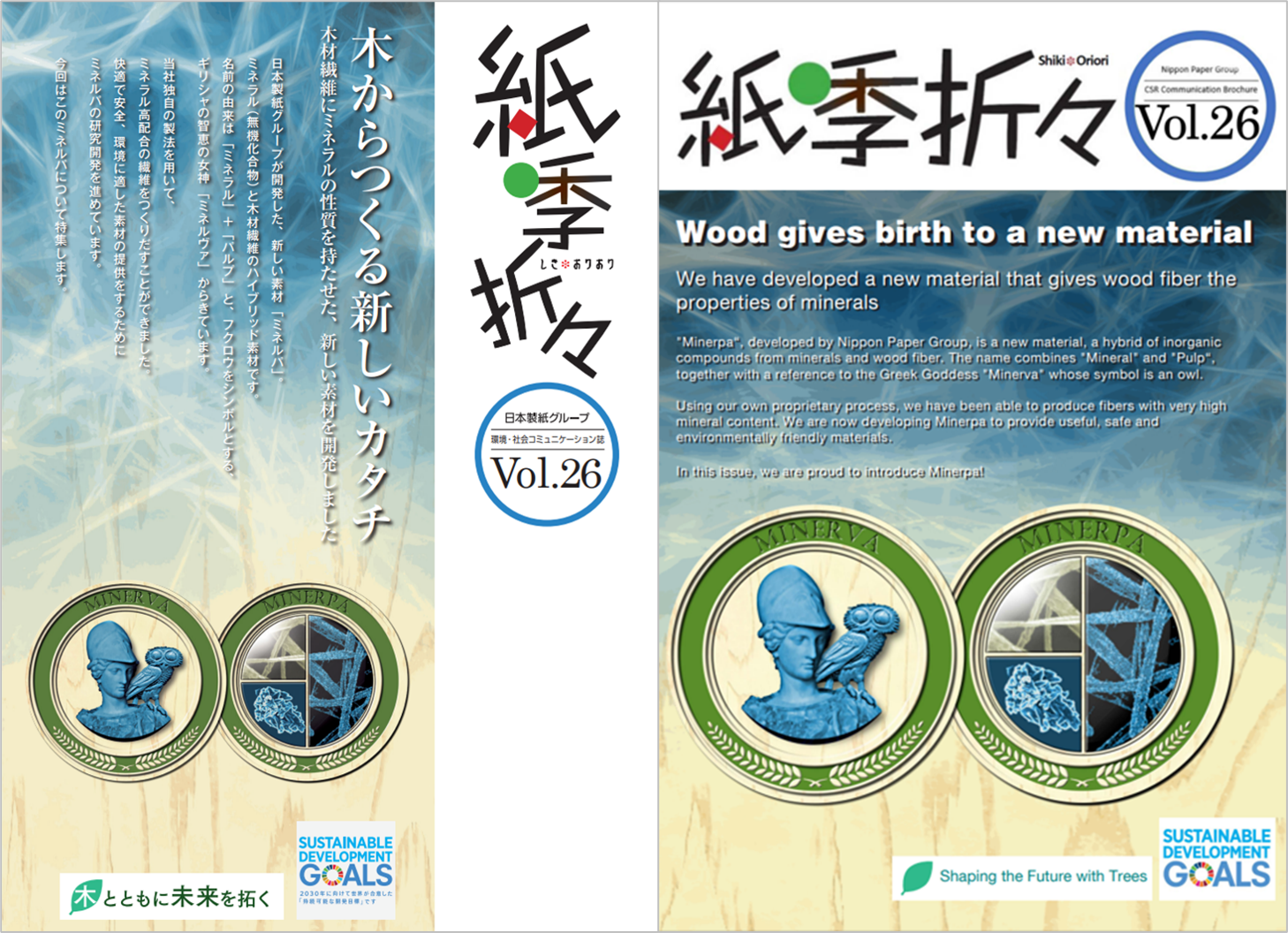
Vol.26 (August 2017)
Main theme
About new materials
Abstract
Nippon Paper Group has developed a new material called "MINERPA." It is a hybrid material of minerals (inorganic compounds) and wood fibers. Using our unique manufacturing method, we have been able to create fibers with a high mineral content. We are advancing research and development of MINERPA to provide a comfortable, safe, and environmentally friendly material. This time, we will feature MINERPA.
Technical discussion guest
Michinari Hamaguchi
President, Japan Science and Technology Agency (JST)
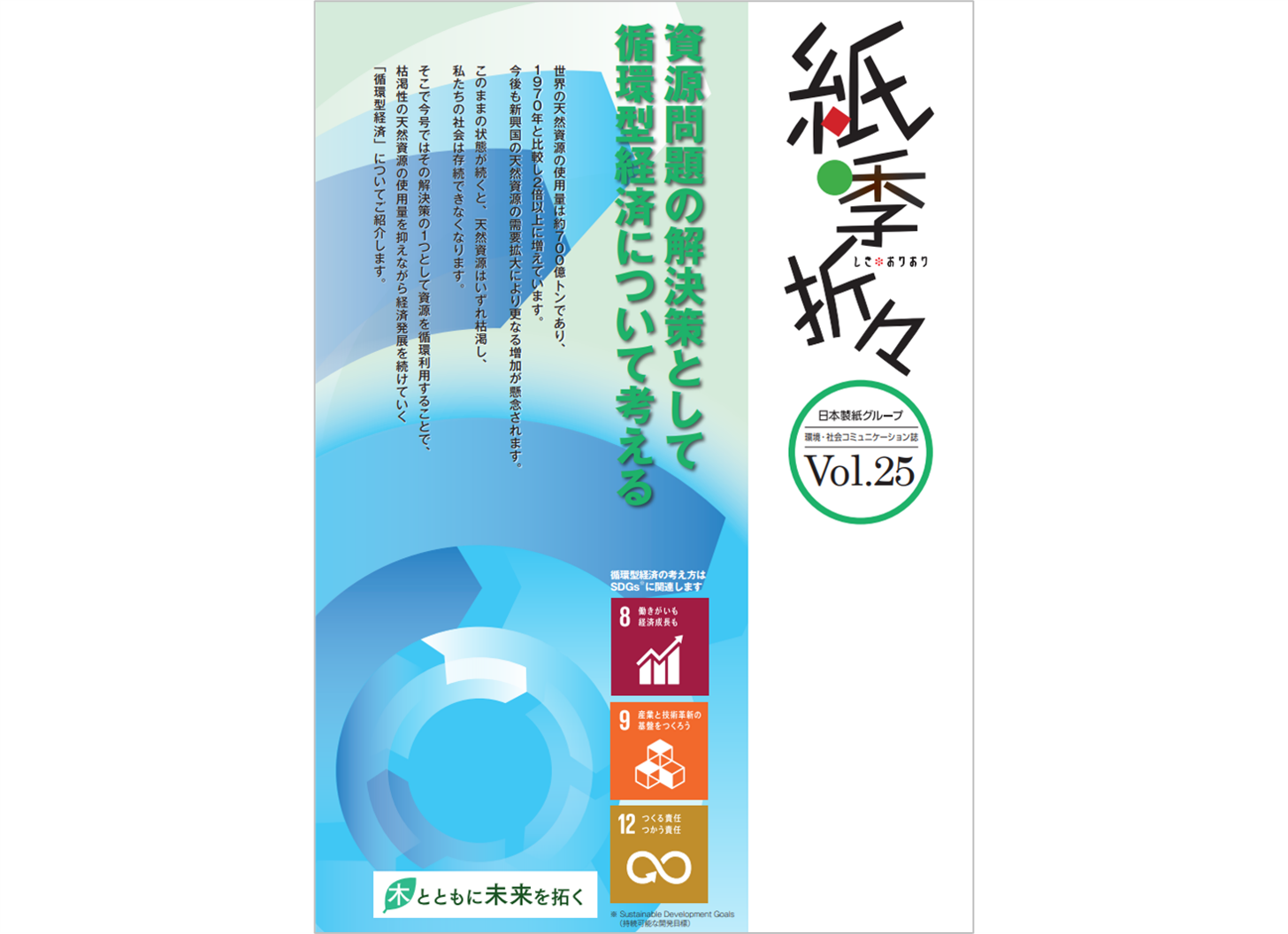
Vol.25 (January 2017)
Main theme
About the circular economy
Abstract
Global consumption of natural resources is increasing rapidly. If this trend continues, natural resources will eventually be depleted, and our way of life will become unsustainable. In this issue, we will introduce one solution: a "circular economy" that allows for economic development while reducing the use of depletable natural resources.
Paper Talk Guest
Eiji Hosoda
Professor, Faculty of Economics, Keio University
Vol.24 (July 2016)
Main theme
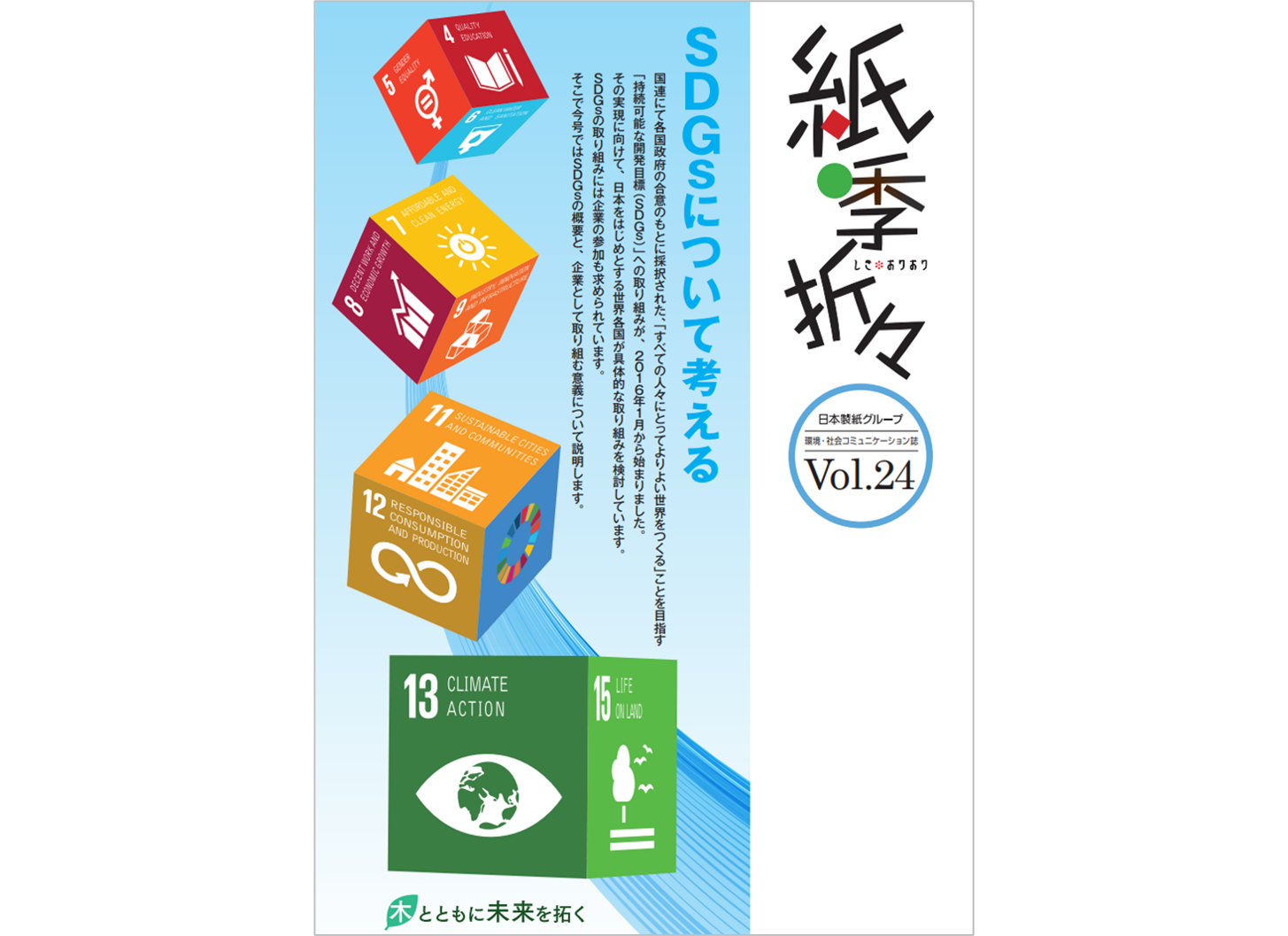
About the Sustainable Development Goals (SDGs)
Abstract
The Sustainable Development Goals (SDGs), adopted by the United Nations with the agreement of national governments, which aim to "create a better world for all," began in January 2016. Countries around the world, including Japan, are considering specific measures to achieve these goals. Corporate participation is also required in the SDGs efforts. Therefore, in this issue, we will explain the overview of the SDGs and the significance of corporate involvement.
Paper Talk Guest
Toshio Arima
Representative Director, Global Compact Network Japan
Vol.23 (April 2016)
Main theme
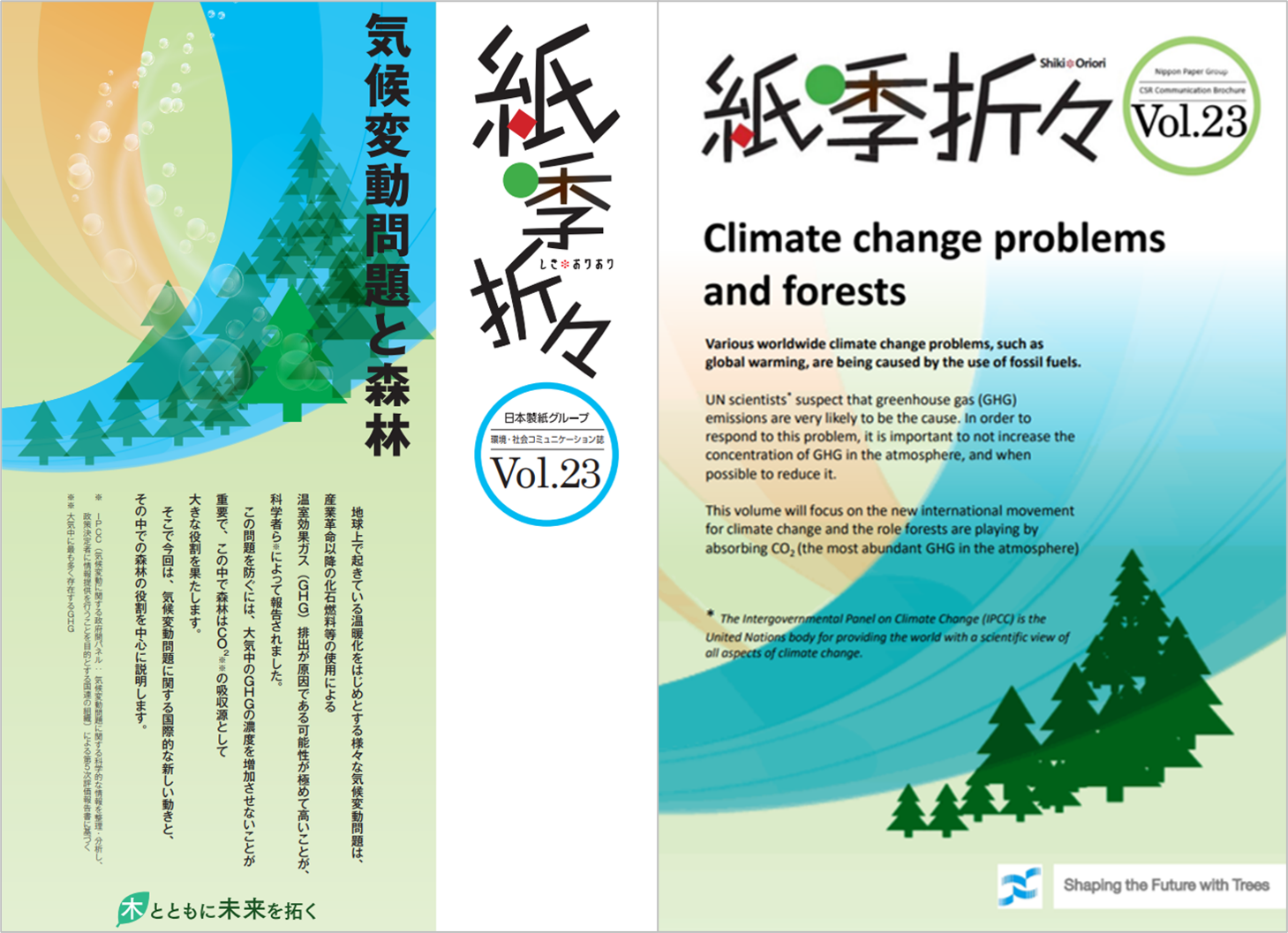
Climate Change and the Role of Forests
Abstract
To prevent climate change on Earth, it is crucial to keep the concentration of greenhouse gases in the atmosphere from increasing, and forests play a vital role as carbon sinks. This issue will focus on new international developments regarding climate change and the role of forests in this context.
Paper Talk Guest
Martin Eustace
President of the UK non-profit organization Two Sides
Vol.22 (September 2015)
Main theme
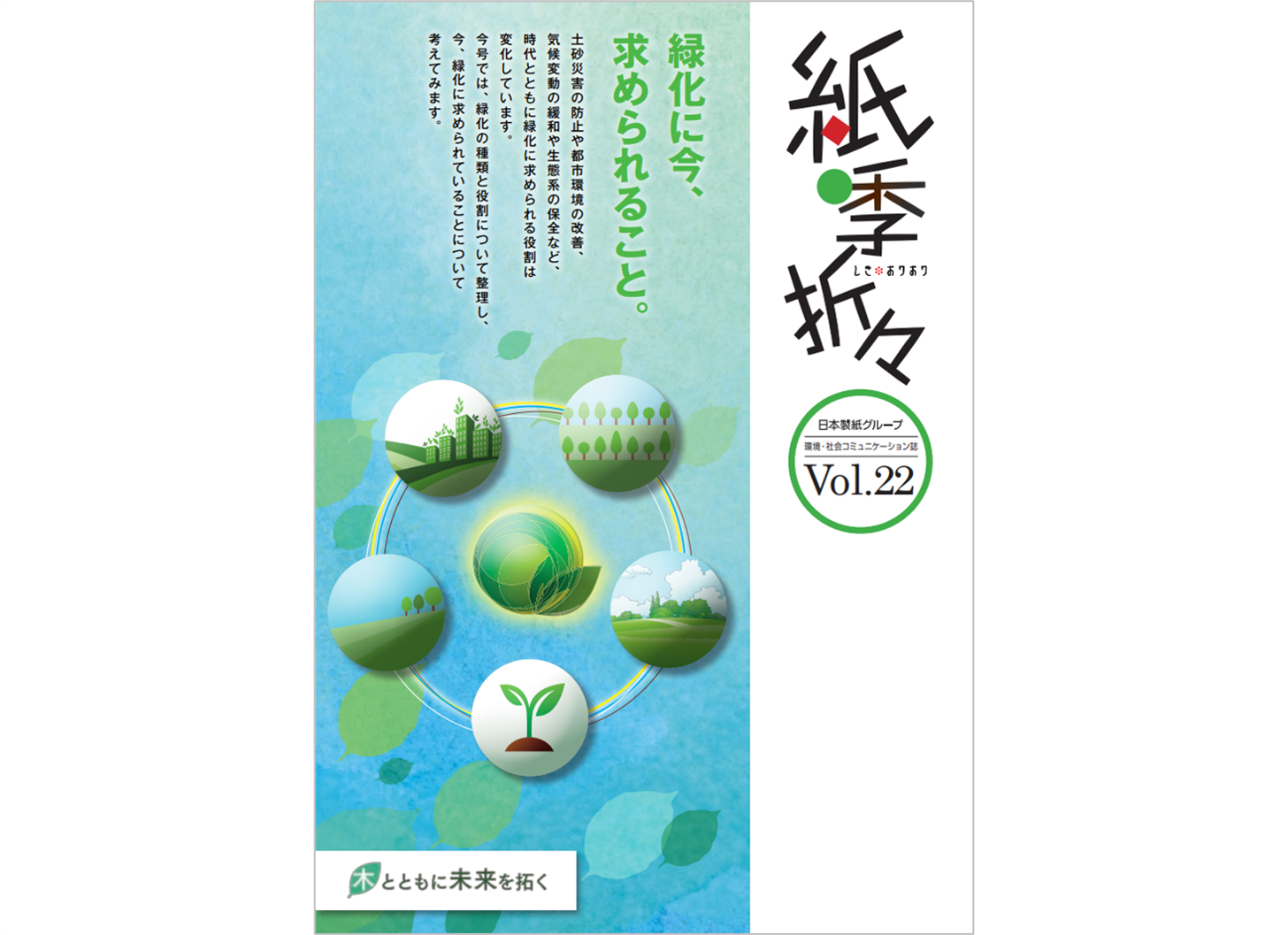
Types of greening and how their roles have changed over time
Abstract
The role expected of greening is changing with the times, encompassing aspects such as preventing landslides, improving urban environments, mitigating climate change, and preserving ecosystems. In this issue, we will organize the types and roles of greening and consider what is required of greening today.
Tree Talk Guest
Sputniko!
Vol.21 (June 2015)
Main theme
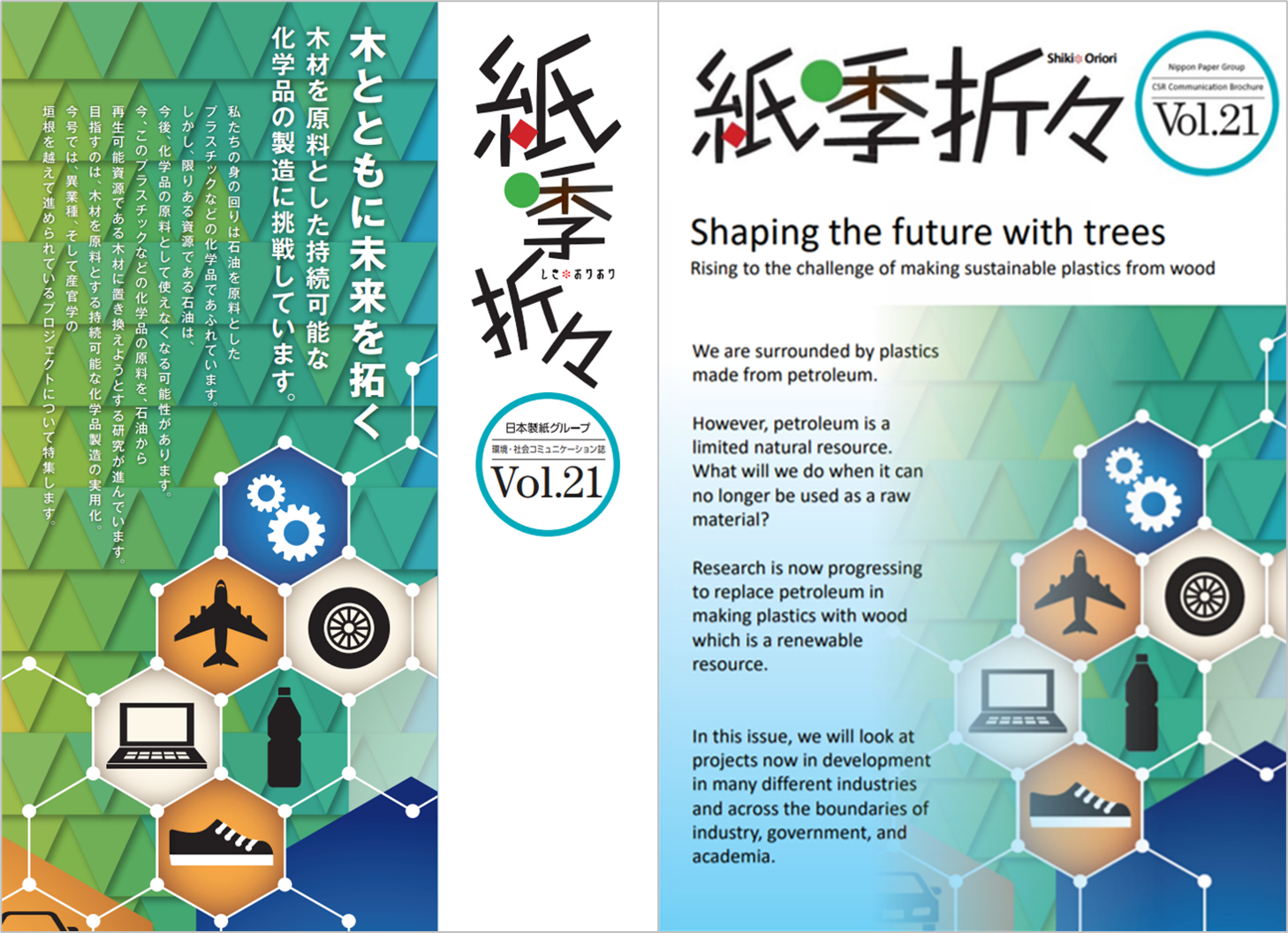
Manufacturing chemical raw materials from wood
Abstract
Nippon Paper Industries is participating in a research project that aims to replace petroleum-based raw materials for chemical products such as plastics with wood, a renewable resource. This issue features this project, which is being advanced across different industries and transcends the boundaries between industry, government, and academia.
Paper Talk Guest
Yoshizumi Ishihara
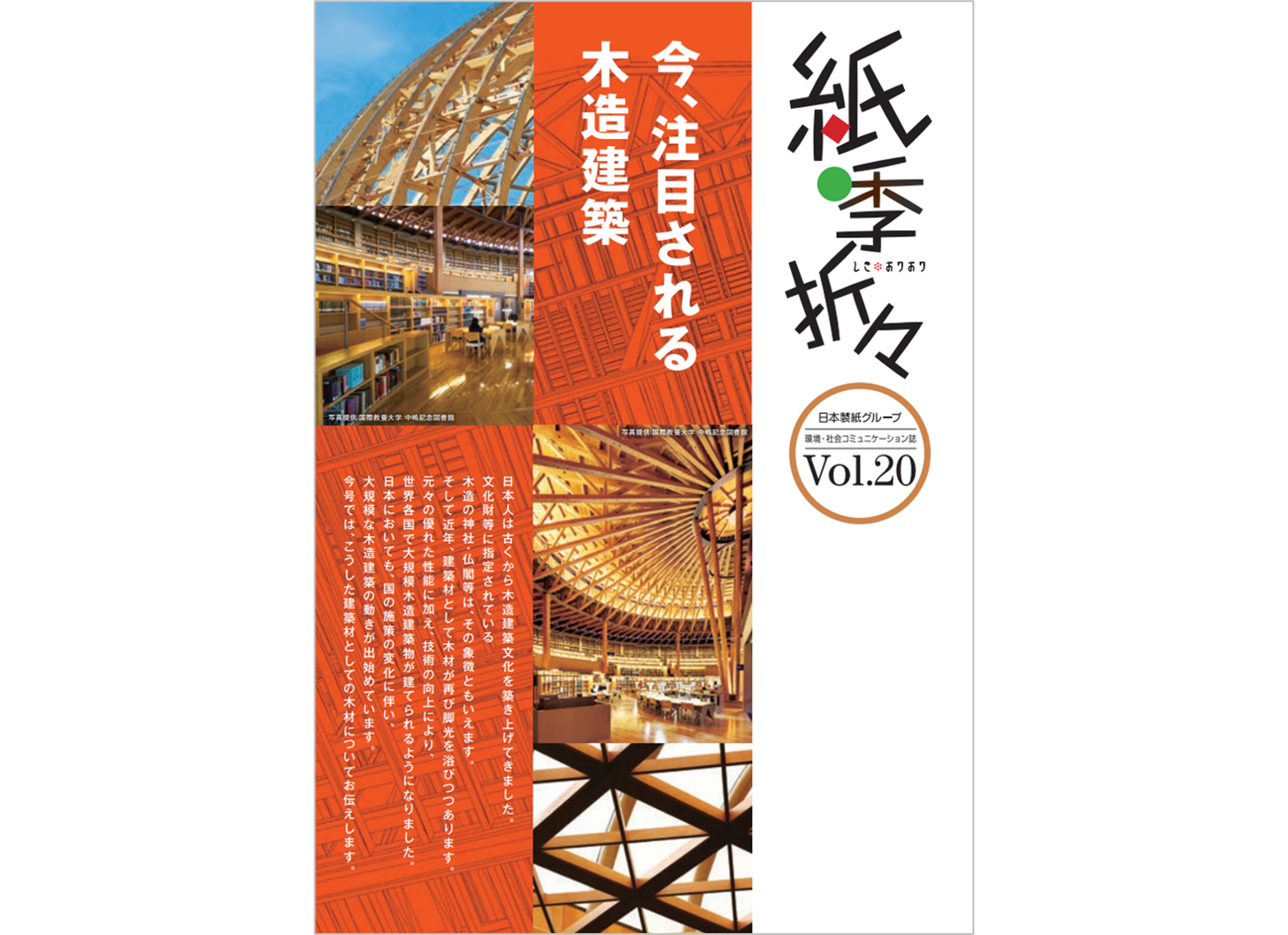
Vol.20 (March 2015)
Main theme
About wood as a building material
Abstract
With technological advancements leading to increased attention on large-scale wooden construction worldwide, Japan is also seeing a shift towards wooden architecture in line with changes in national policy. This is partly driven by expectations of increased demand for domestically produced timber, and we will also introduce the initiatives of the Nippon Paper Group related to this.
Tree Talk Guest
Shigeru Ban
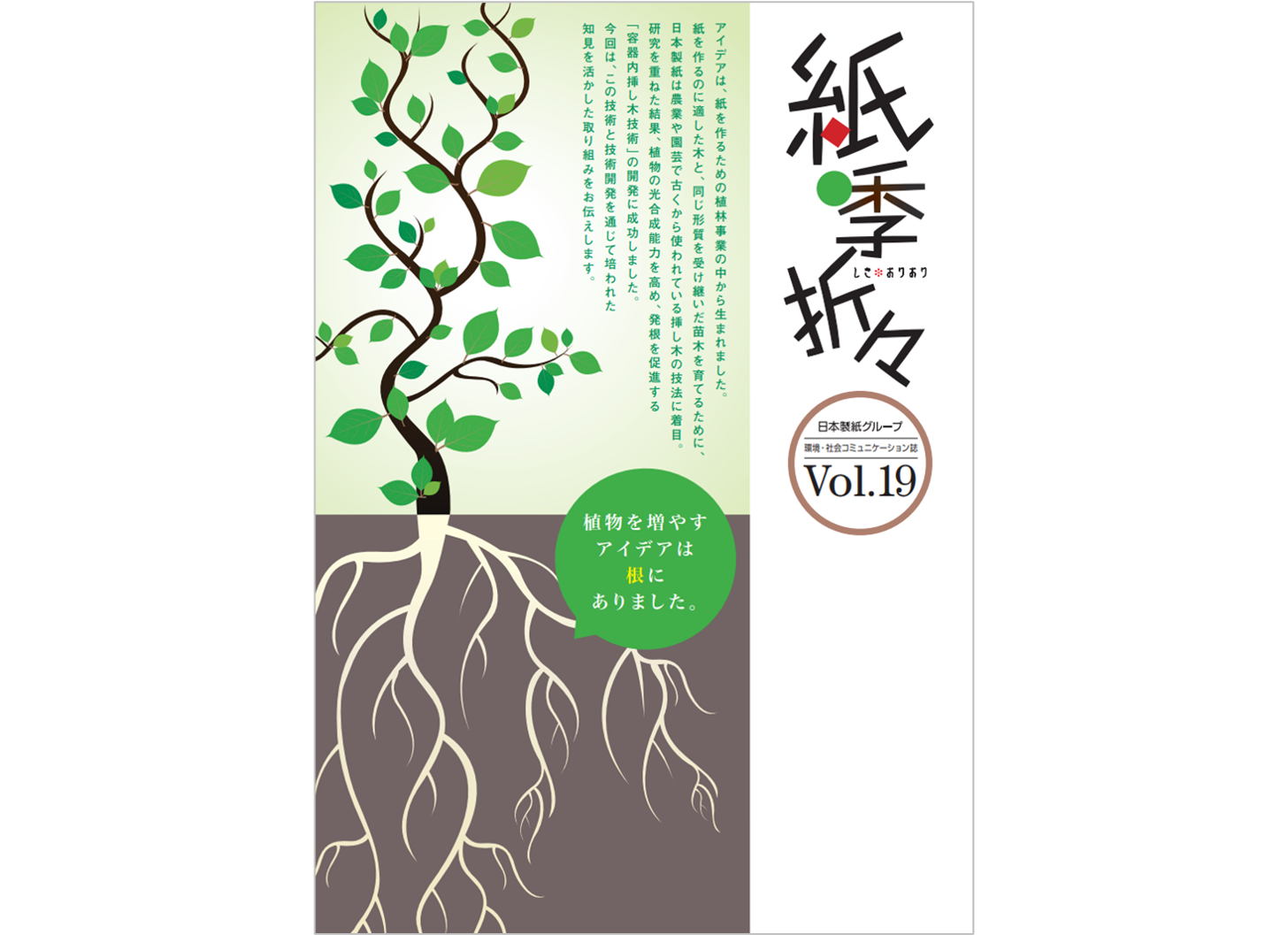
Vol.19 (October 2014)
Main theme
Various initiatives stemming from plant rooting technology
Abstract
To cultivate trees suitable for papermaking and seedlings that inherit the same traits, Nippon Paper Industries focused on the cuttings technique, which has been used in agriculture and horticulture for centuries. Through extensive research, they succeeded in developing "in-container cuttings technology," which enhances the photosynthetic capacity of plants and promotes rooting. This time, we will introduce this technology and the initiatives related to revitalizing agriculture and contributing to society, utilizing the knowledge gained through its development.
Paper Talk Guest
KIKI
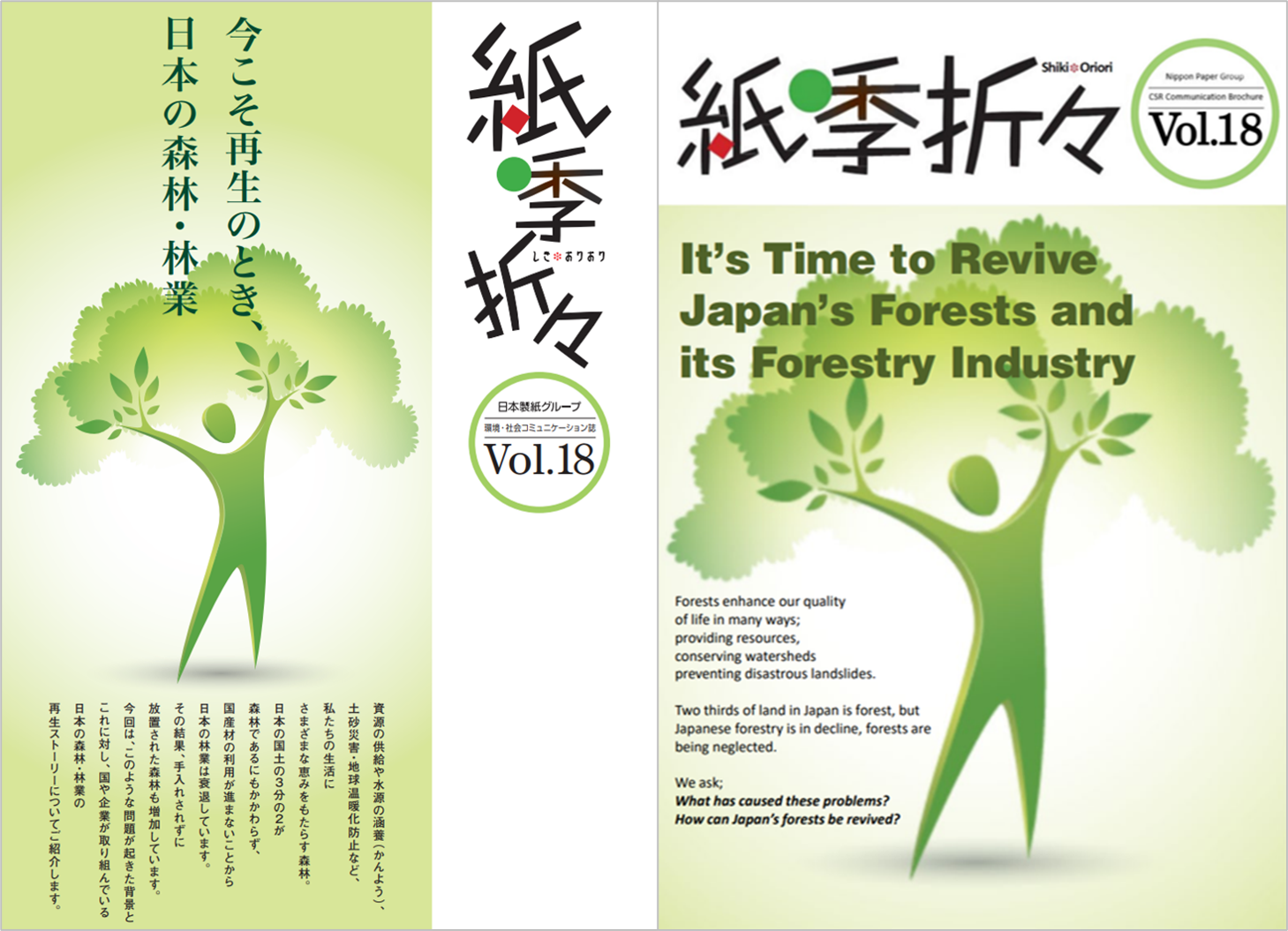
Vol.18 (June 2014)
Main theme
Forestry in Japan
Abstract
Forests provide numerous benefits to our lives, including the supply of resources, water conservation, and prevention of landslides and global warming. Despite two-thirds of Japan's land being covered by forests, the use of domestically produced timber is not progressing, the Japanese forestry industry is in decline, and the amount of neglected forests is increasing. This article will introduce the background to these problems and the story of the revitalization of Japan's forests and forestry industry, which is being undertaken by the government and companies.
Paper Talk Guest
Shion Miura
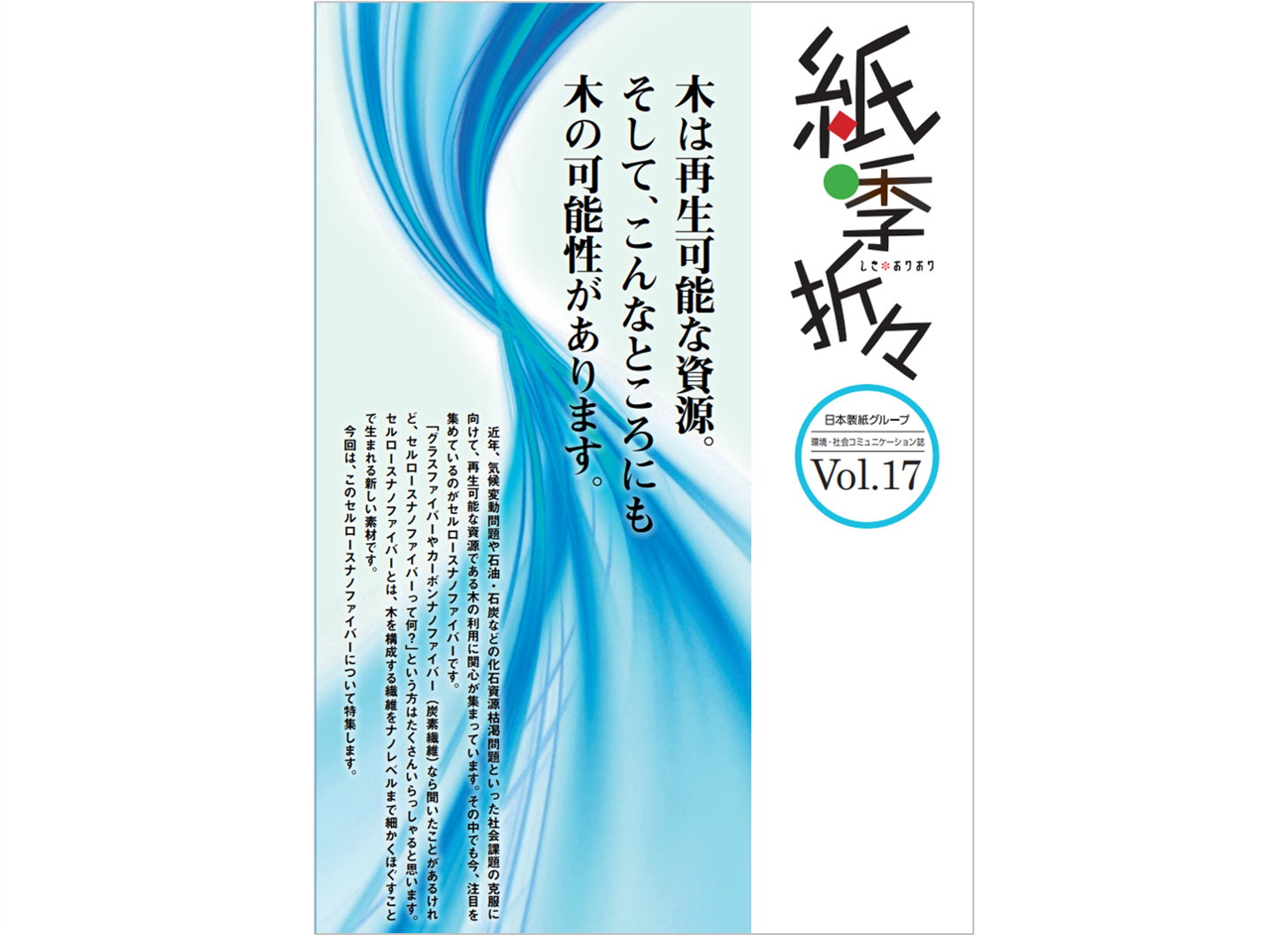
Vol.17 (July 2013)
Main theme
cellulose
Abstract
In recent years, there has been growing interest in using wood, a renewable resource, to address social issues such as climate change and the depletion of fossil fuels. Among these, cellulose nanofiber is attracting particular attention. This is a new material created by breaking down the fibers that make up wood to the nanoscale, and its characteristics include being "stronger than iron and lighter than plant fiber." This issue features cellulose nanofiber.
Paper Talk Guest
Randy Taguchi
Vol.16 (March 2013)
Main theme
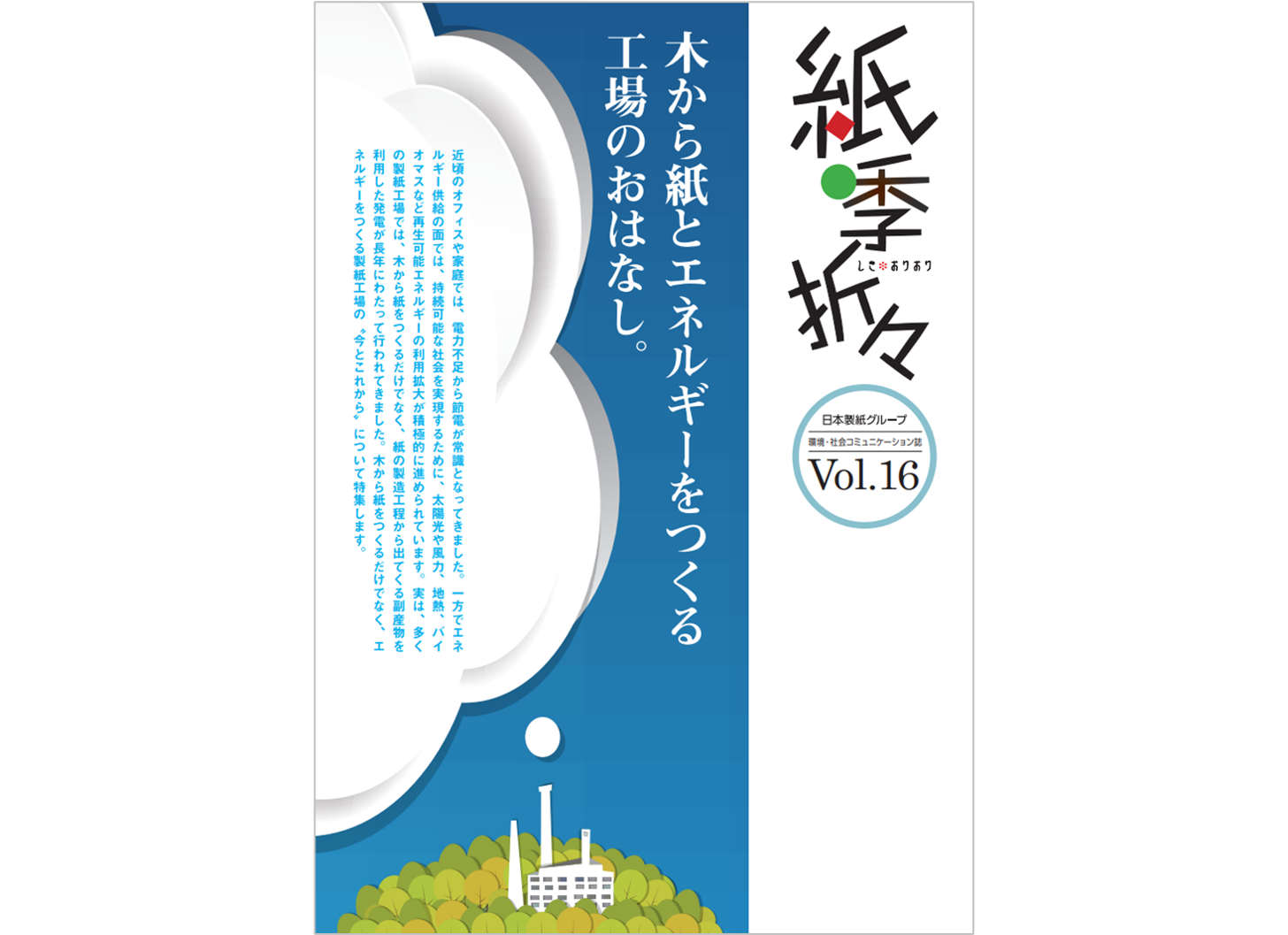
A paper mill that also functions as a power plant.
Abstract
Paper mills have long had a system in place to generate energy not only from wood for paper production, but also by burning the by-product "black liquor." Paper mills also play the role of power plants that generate energy from "wood," a renewable resource. The Nippon Paper Group will leverage its strengths, such as its infrastructure and power generation expertise, to supply electricity, which is essential to our lives, using renewable woody raw materials.
Paper Talk Guest
Iruka
Vol.15 (October 2012)
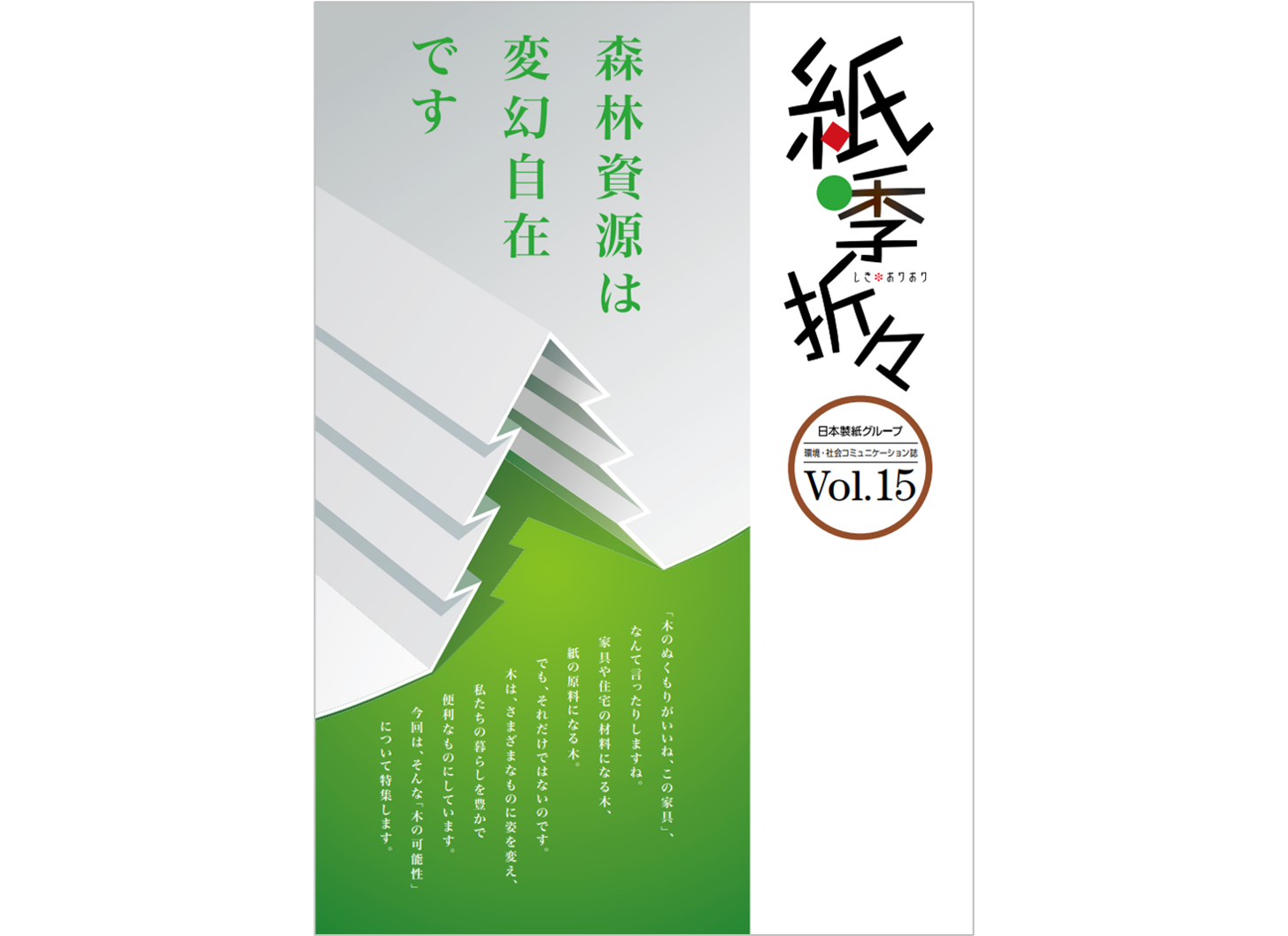
Main theme
"Wood" that we use in our daily lives
Abstract
At Nippon Paper Group, we utilize wood, a renewable resource, to supply a variety of products that support daily life and society, including paper, textiles for clothing, and food additives. In this issue, as part of our "Nippon Paper Group in Everywhere" series, we introduce various products made from wood that are found around us.
Paper Talk Guest
Kosetsu Minami
Vol.14 (April 2012)
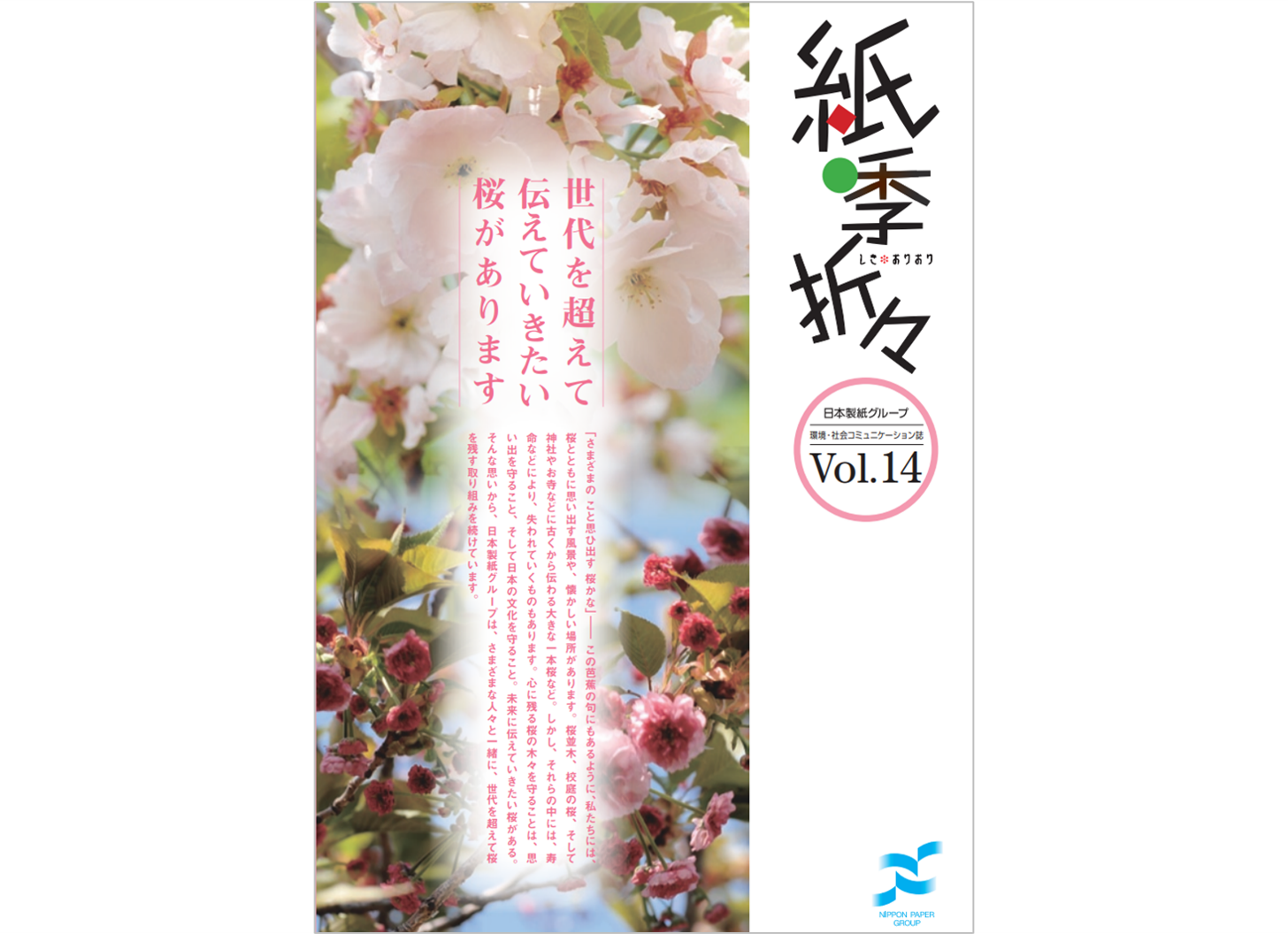
Main theme
Cherry blossom preservation
Abstract
Throughout Japan, there are many precious cherry trees with a long history that we want to preserve for future generations. However, some of them are weakening due to old age and are on the verge of dying. Nippon Paper Industries is using its unique biotechnology, "in-container grafting technology," to conserve cherry trees of high historical and academic value.
Paper Talk Guest
Takeo Chii
Vol.13 (February 2012)
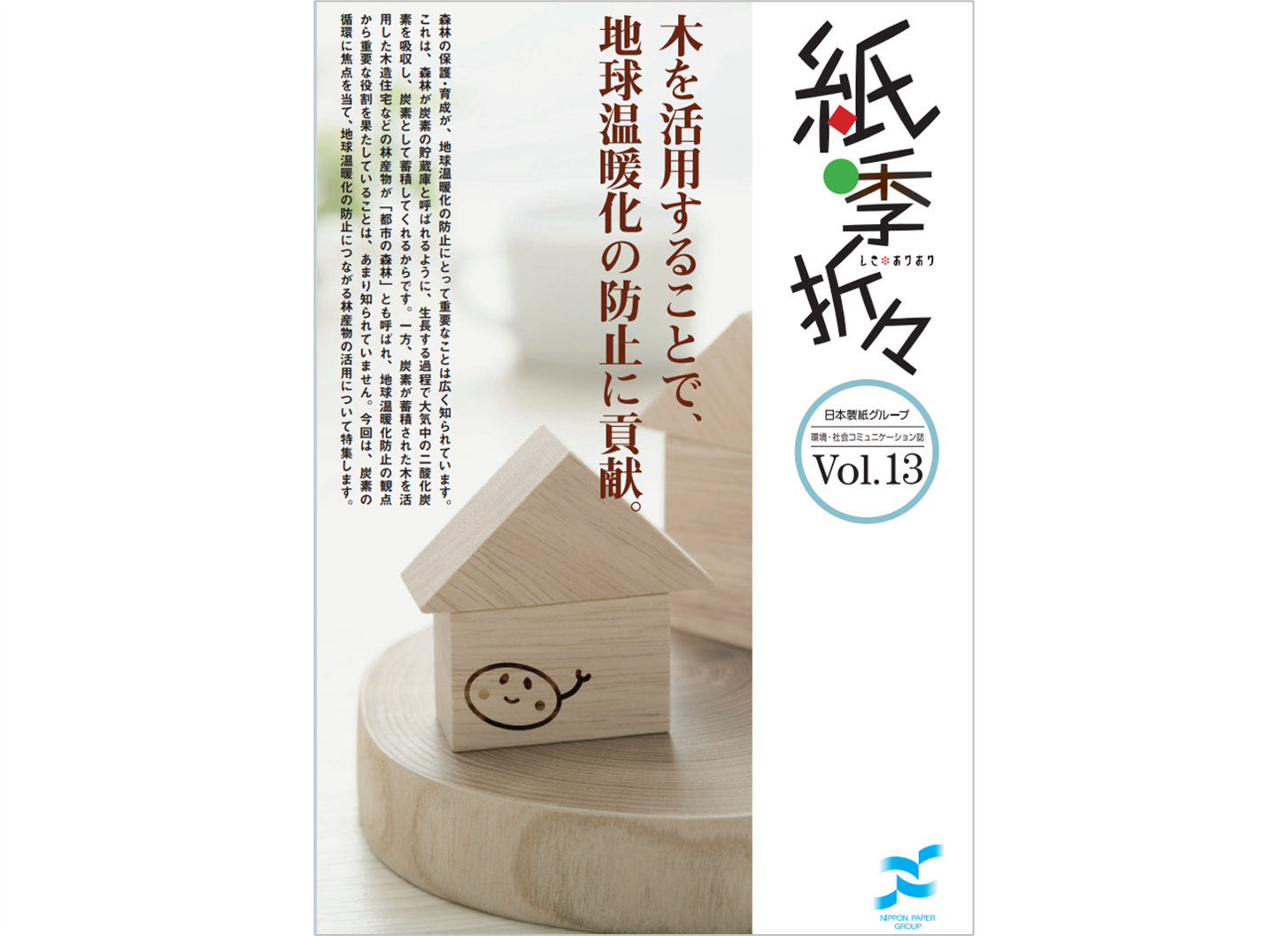
Main theme
Utilizing wood to prevent global warming
Abstract
Forests are known as carbon reservoirs and play a crucial role in preventing global warming. Furthermore, forest products such as wooden houses, which utilize carbon-storage wood, are also referred to as "urban forests" and function as carbon reservoirs. This issue focuses on the carbon cycle and features articles on the utilization of forest products to help prevent global warming.
Paper Talk Guest
Goro Yamada
Vol.12 (February 2011)
Main theme
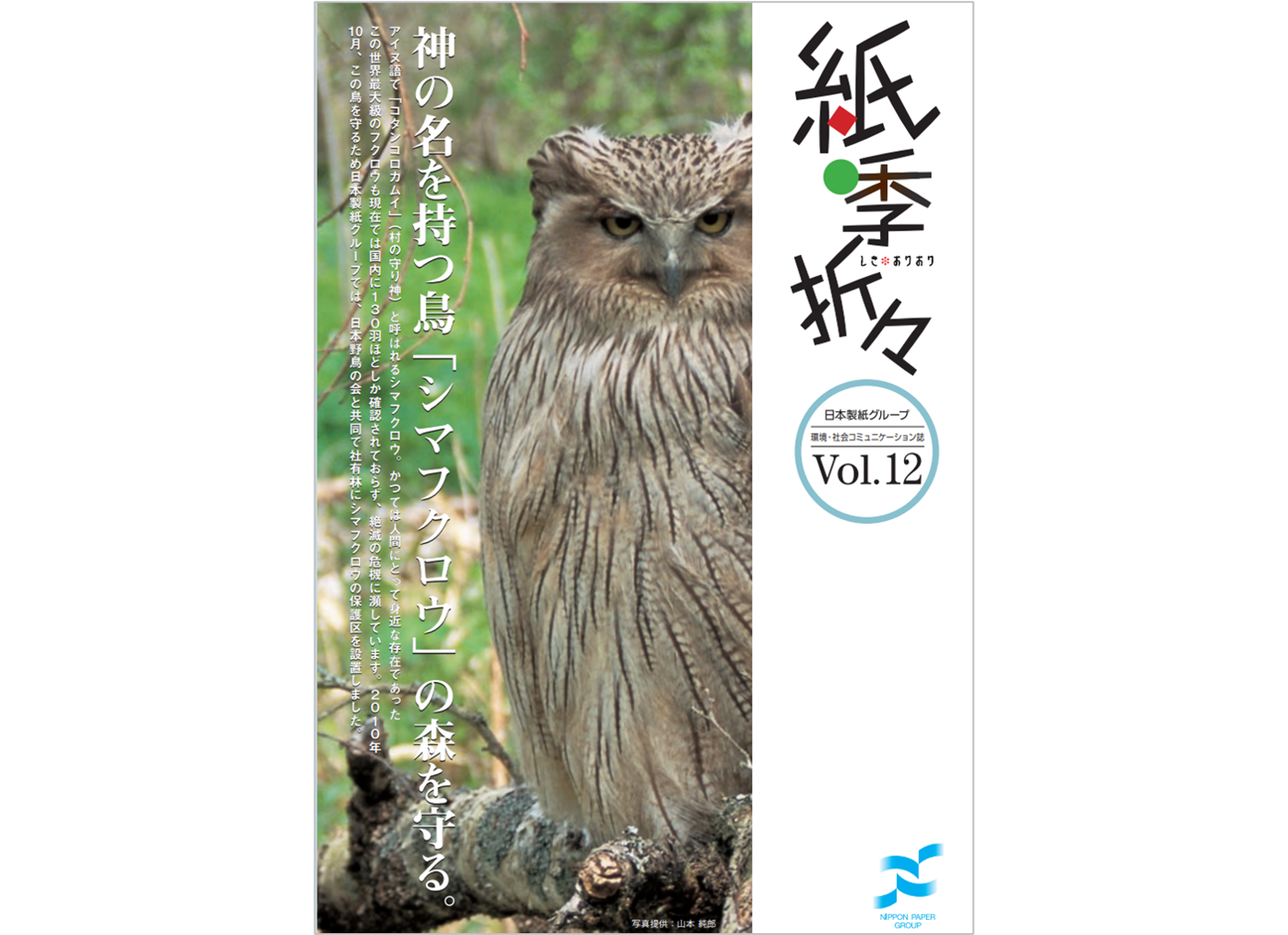
Conservation of Blakiston's fish owls
Abstract
The Blakiston's fish owl is a national natural monument and an endangered species. To protect this bird, of which there are currently only 130 left in Japan, the Wild Bird Society of Japan and Nippon Paper Industries have jointly established a protected area for the Blakiston's fish owl in Nippon Paper Industries' company-owned forest.
Paper Talk Guest
Hiroshi Yagyu
Vol.11 (October 2010)
Main theme
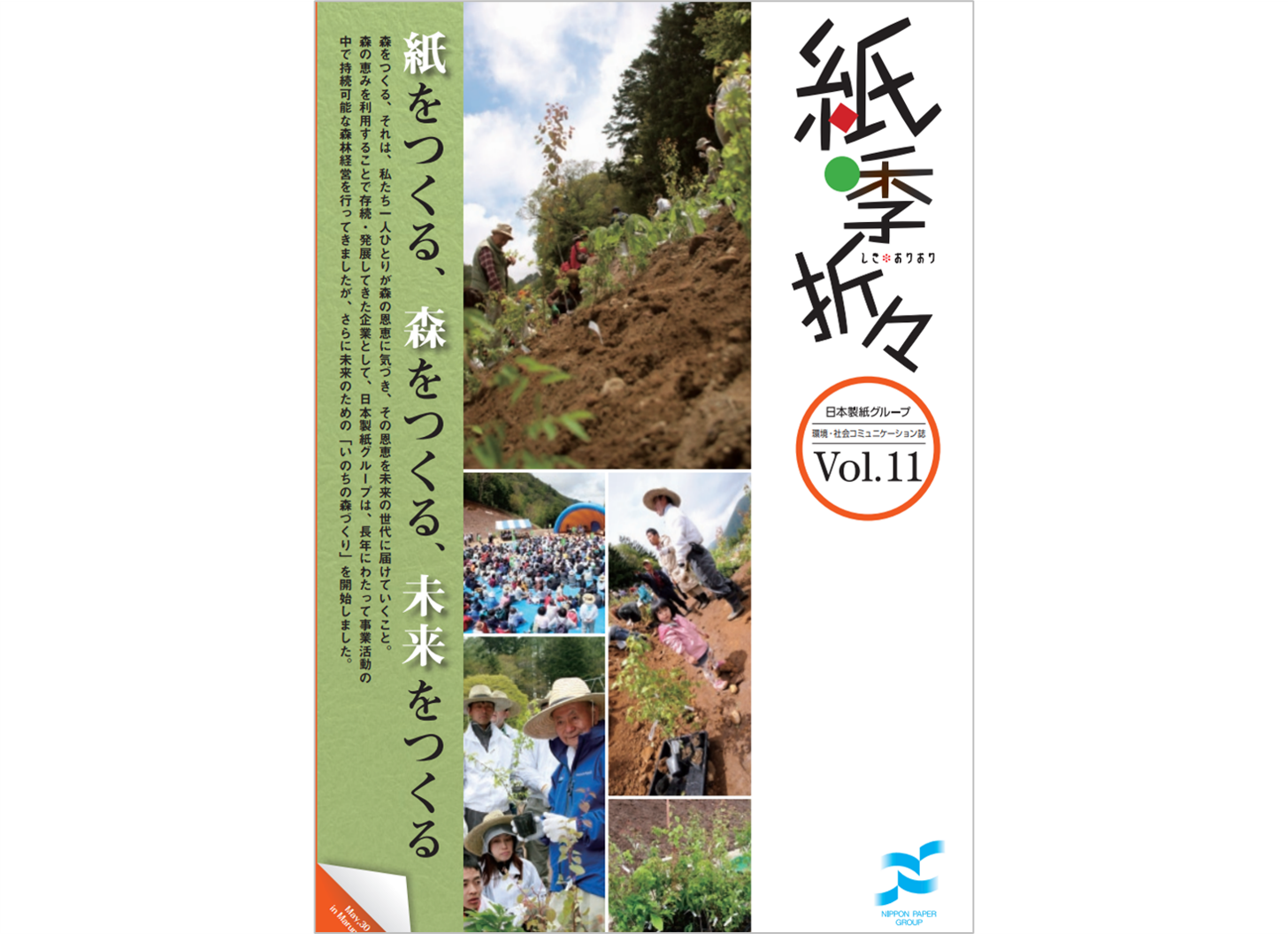
Creating a "Forest of Life" for the Future
Abstract
Creating forests means that each of us recognizes the benefits of forests and passes those benefits on to future generations.

In addition to forest conservation efforts in our business activities, the Nippon Paper Group has launched "Creating Forests of Life for the Future," an initiative in which participants themselves plant trees to deepen their appreciation for forests.
Paper Talk Guest
Keiko Takeshita
Vol.10 (June 2010)
Main theme
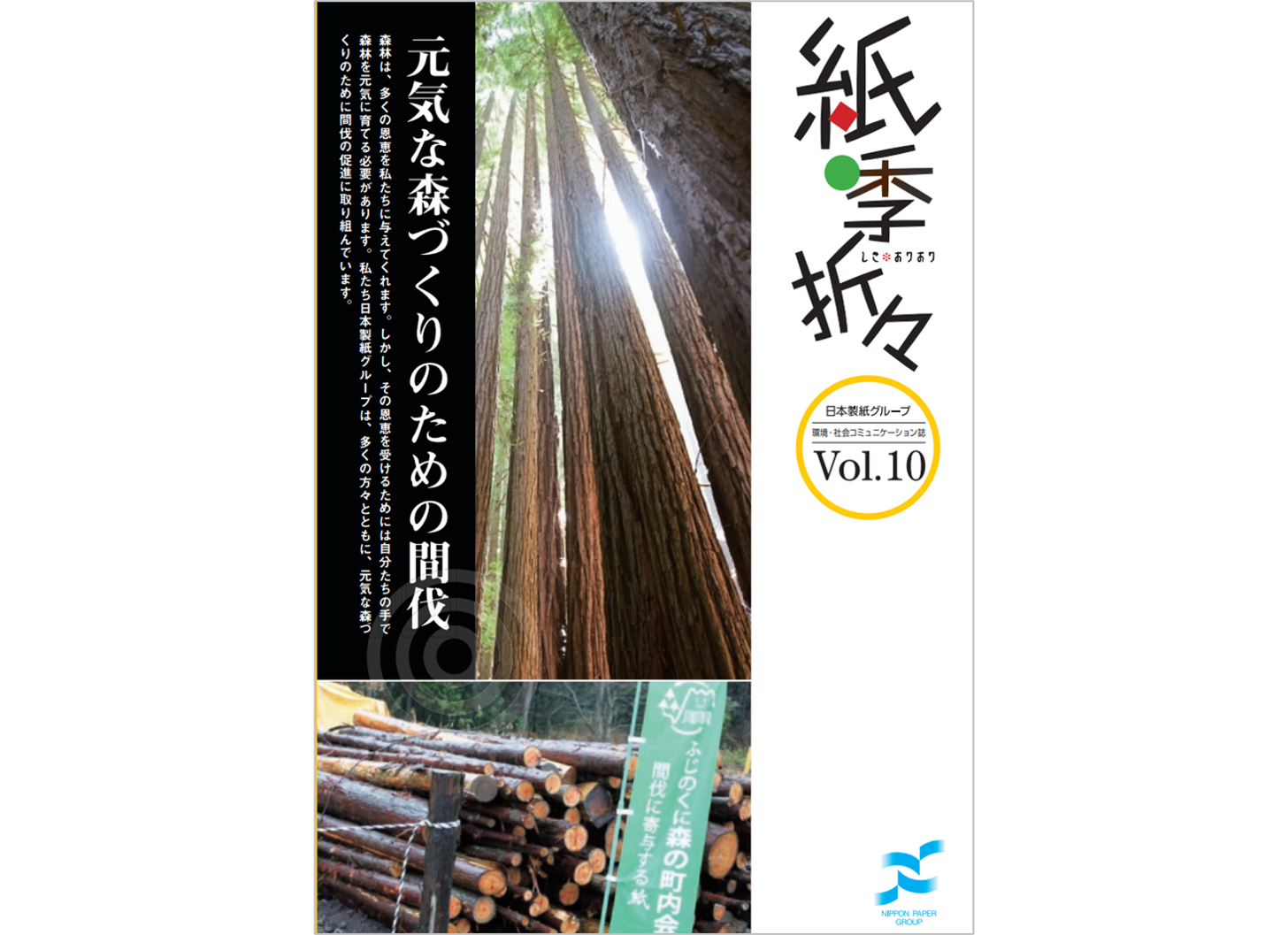
Thinning
Abstract
The deterioration of Japan's forests is a growing problem, and attention is increasingly being drawn to the importance of thinning to prevent this deterioration. In this issue, we examine the necessity of thinning and focus on the "Forest Neighborhood Association" initiative promoted by the environmental NPO "Office Neighborhood Association." We also introduce the Nippon Paper Group's efforts to utilize thinned timber, including their cooperation with the Forest Neighborhood Association.
Paper Talk Guest
Katsuhiko Hibino
Vol.09 (June 2009)
Main theme
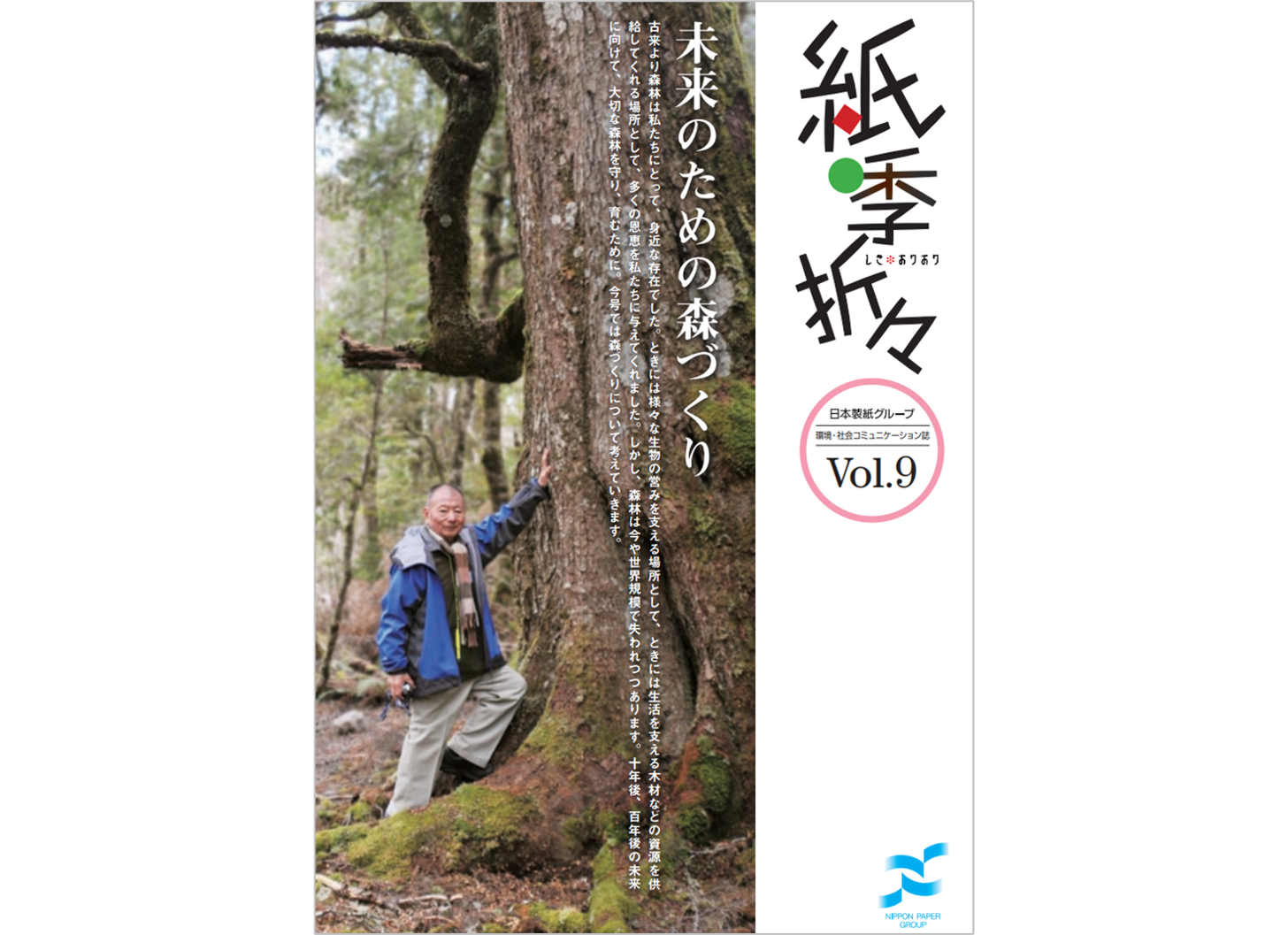
Forest creation
Abstract
Forests provide us with a variety of benefits: they support the activities of living things, they supply resources such as timber that sustain our lives, and they act as carbon reservoirs that sequester carbon dioxide. However, even today, a large amount of forest is lost every year, making it crucial to increase the amount of forest. In this issue, we will organize our thoughts on forest creation and feature the efforts of Professor Emeritus Akira Miyawaki of Yokohama National University, who is promoting forest creation in a way that is in line with the land's natural environment.
Paper Talk Guest
Akira Miyawaki
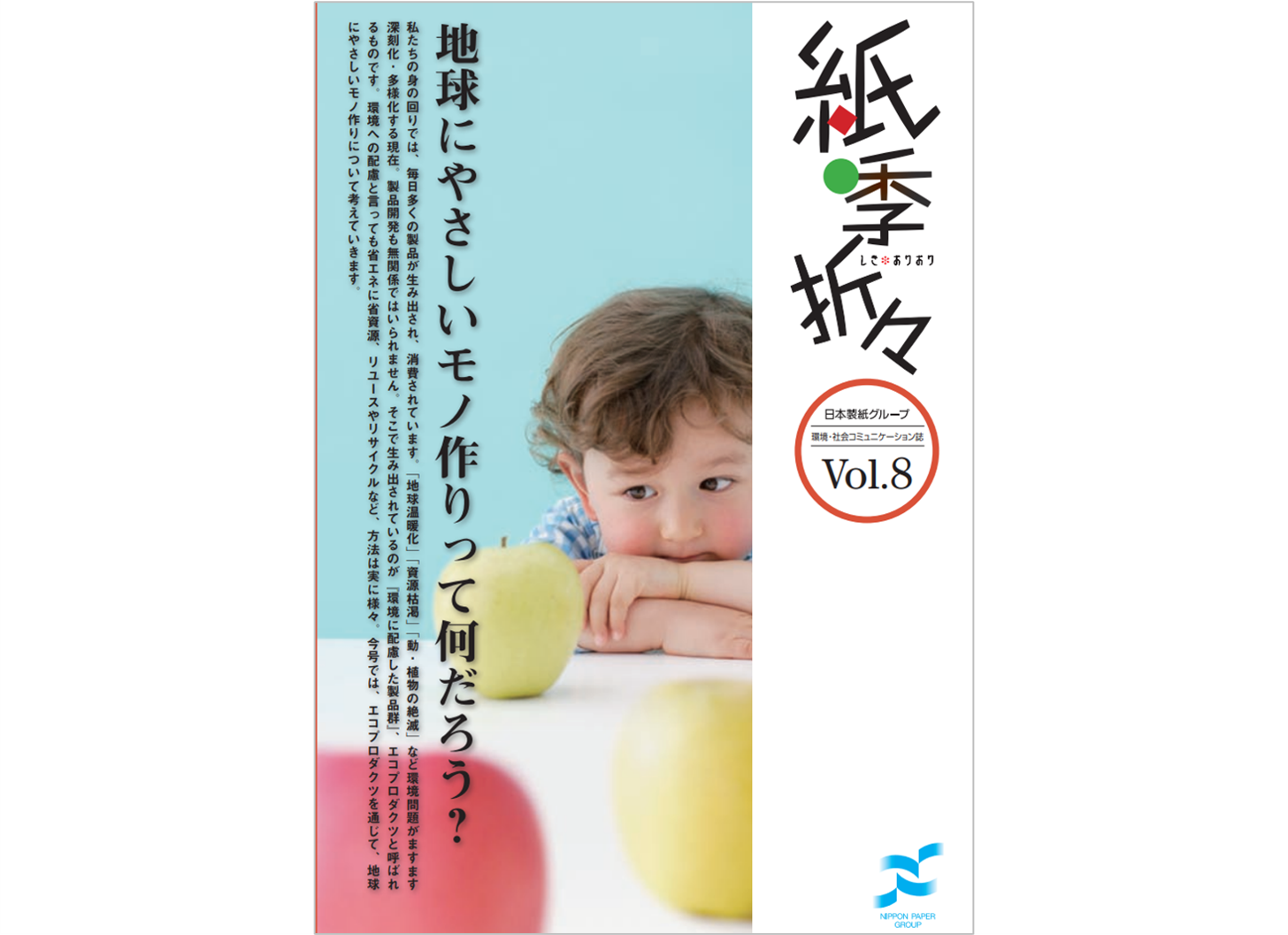
Vol.8 (January 2009)
Main theme
Eco-products
Abstract
From an environmental perspective, perhaps the most environmentally friendly way to live is to abandon the "convenient lifestyle" that symbolizes modern times. However, it is also true that it is difficult for us, who have become accustomed to a convenient world, to give up everything, and there is a strong desire for the development of products with a lower environmental impact and the widespread use of such products. In this issue, we consider environmentally friendly manufacturing and eco-products.
Paper Talk Guest
Rei Kikukawa
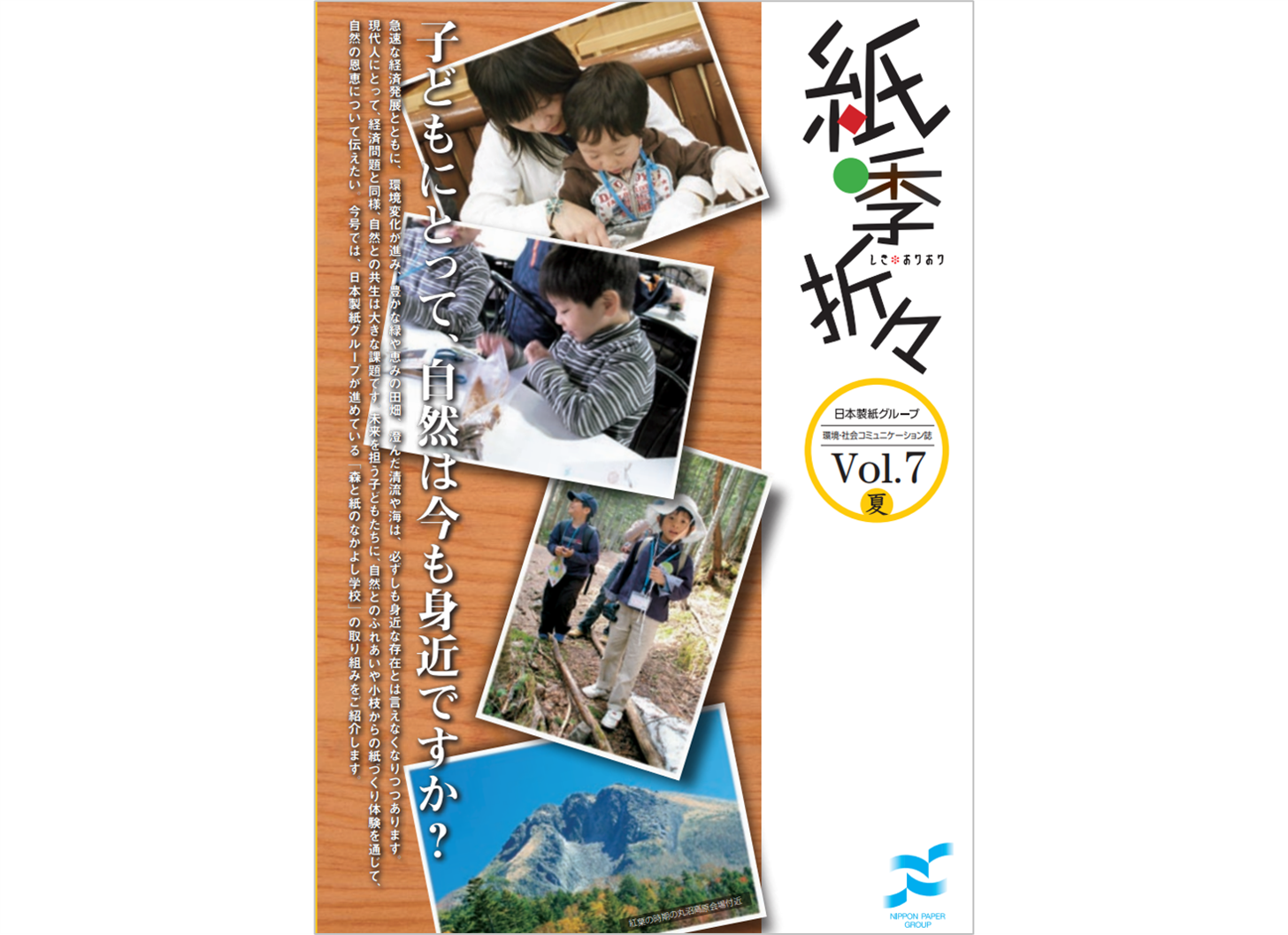
Vol.7 (September 2008)
Main theme
Nature and Children (Environmental Education)
Abstract
In recent years, children have had fewer opportunities to interact with nature. Nippon Paper Group is using its own forests to hold a nature environment class called "Forest and Paper Friendship School," providing children with opportunities to connect with nature. In addition, as part of the program, children can experience papermaking using twigs as raw material, aiming to help them understand the connection between "paper," which is familiar in their daily lives, and "forests," and to learn about the importance of nature.
Paper Talk Guest
Hiroshi Aramata
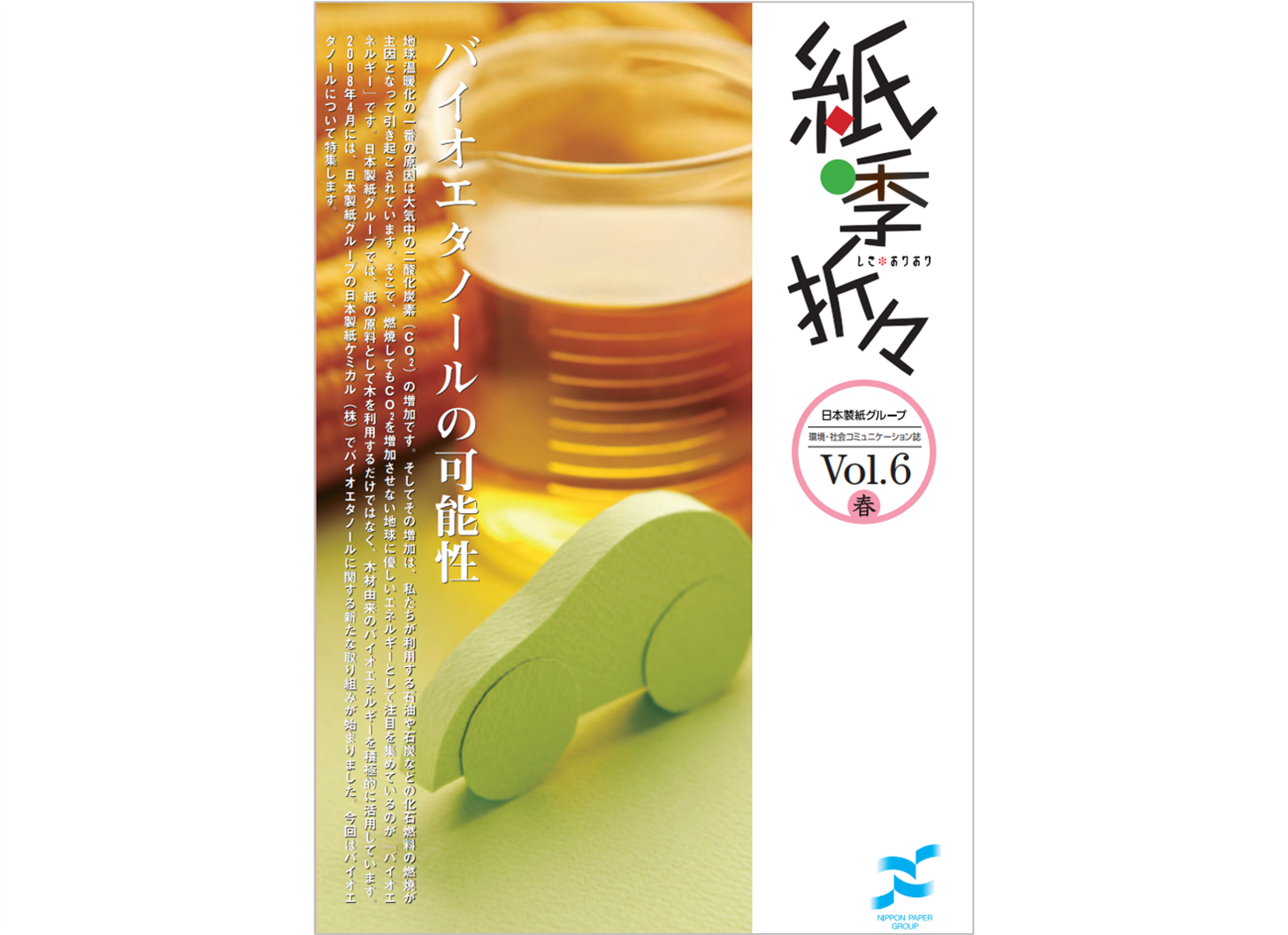
Vol.6 (June 2008)
Main theme
Bioethanol
Abstract
Bioethanol is attracting attention as one measure to combat global warming. However, there are concerns that bioethanol produced from food sources such as corn could potentially trigger a food crisis.

Nippon Paper Chemical, a member of the Nippon Paper Group, has begun a feasibility study with Cosmo Oil Co., Ltd. on the production of bioethanol using wood as a raw material, which does not compete with food resources. This issue introduces the potential of environmentally friendly bioethanol.
Paper Talk Guest
Tozuki Toi
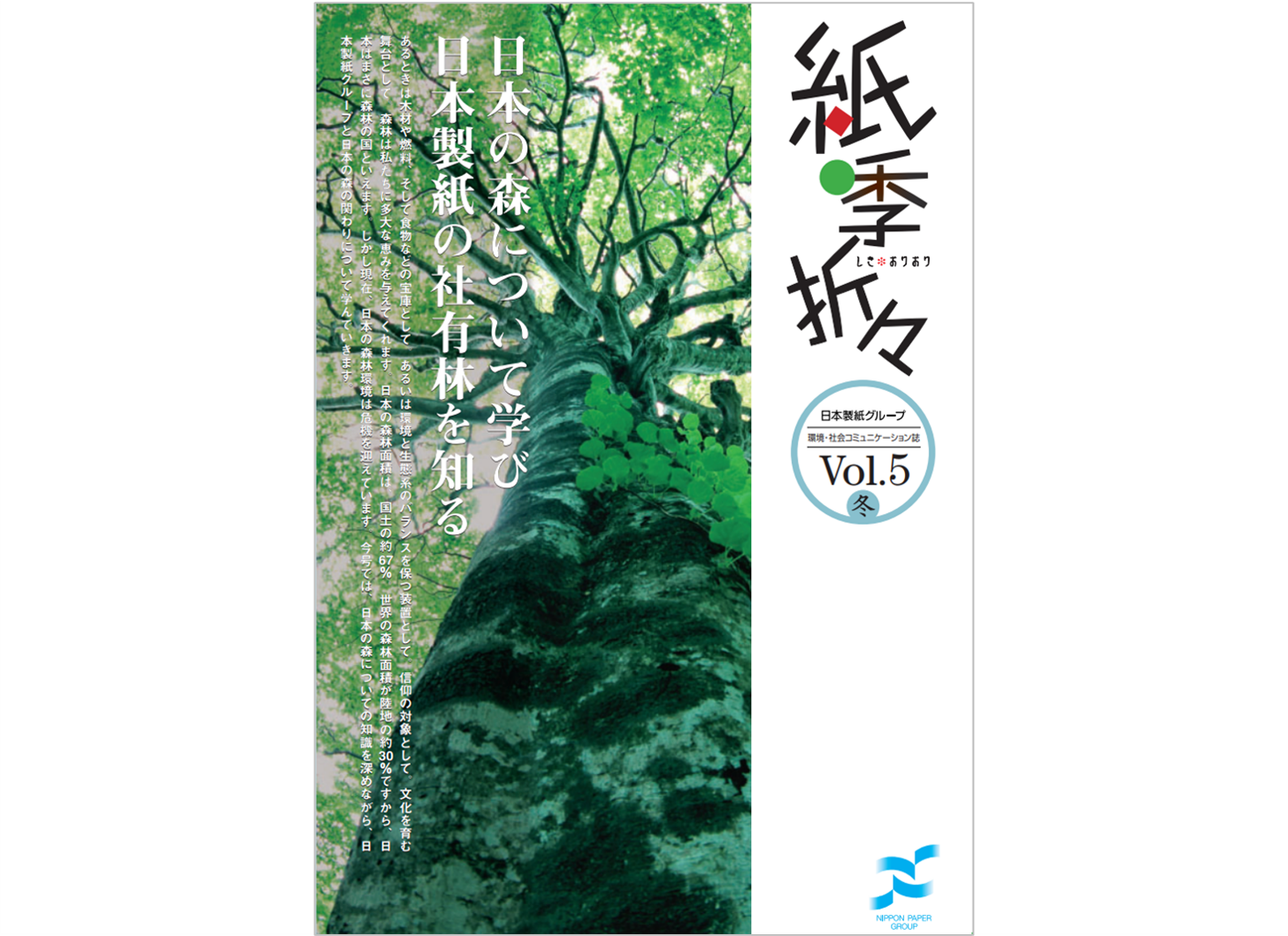
Vol.5 (February 2008)
Main theme
Japanese forests
Abstract
Forests cover 67% of Japan's land area. Compared to the world's forest area, which is about 30% of the land area, this shows that Japan is a country rich in forests. However, it is said that Japan's forests are currently in a critical state. What is happening to Japan's forests? We will learn about Japan's forests and summarize the domestic company-owned forests of Nippon Paper Industries.
Paper Talk Guest
Mariko Bando
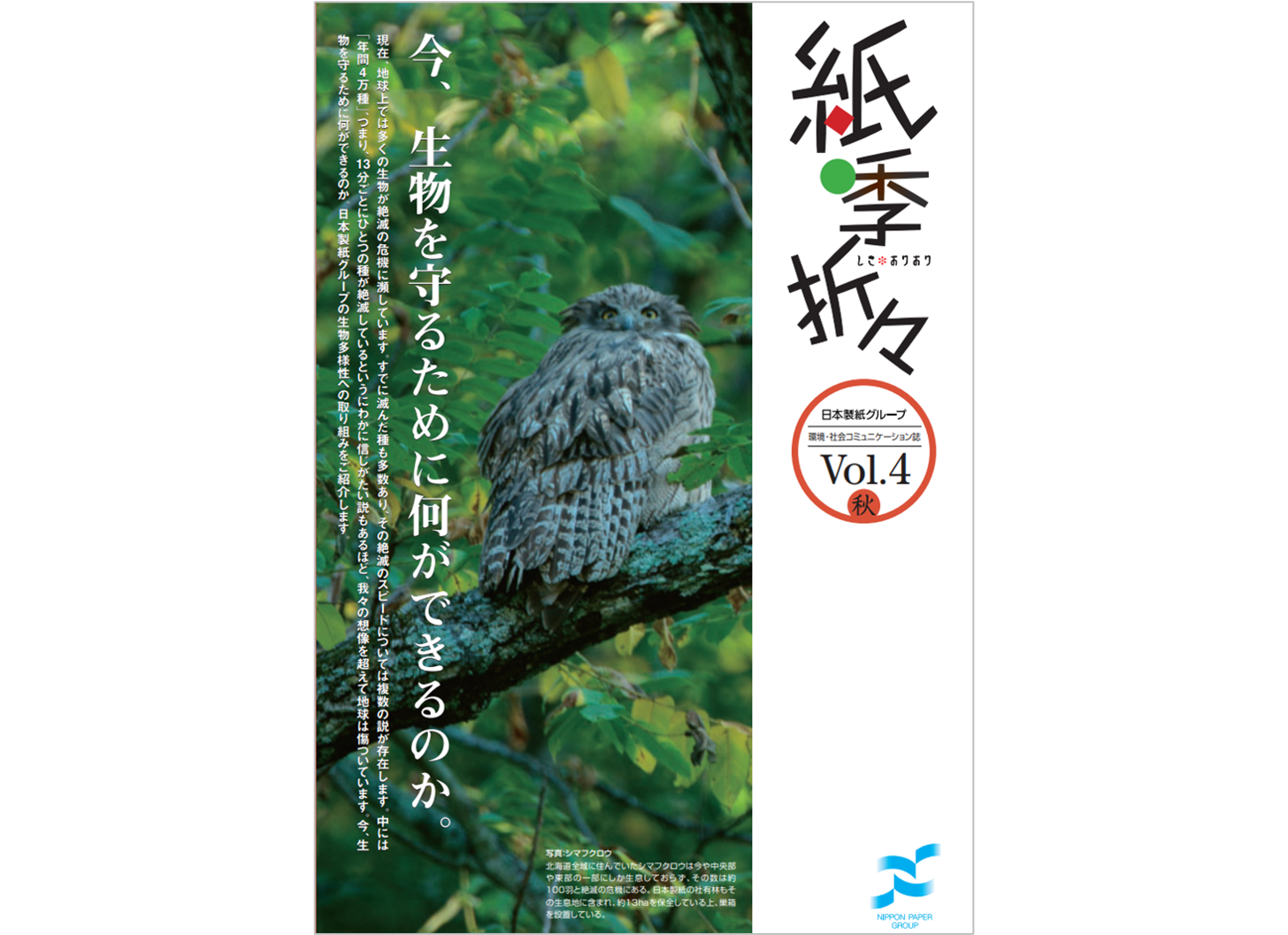
Vol.4 (October 2007)
Main theme
Biodiversity
Abstract
Currently, many species on Earth are facing extinction, making "biodiversity conservation" a pressing need. In the spring of 2007, the Nippon Paper Group explicitly stated in its Environmental Charter that it would "conduct corporate activities with consideration for biodiversity and ecosystem conservation." Now, let's look at what we can do to protect living things, and introduce the Nippon Paper Group's initiatives toward biodiversity.
Paper Talk Guest
Makoto Shiina
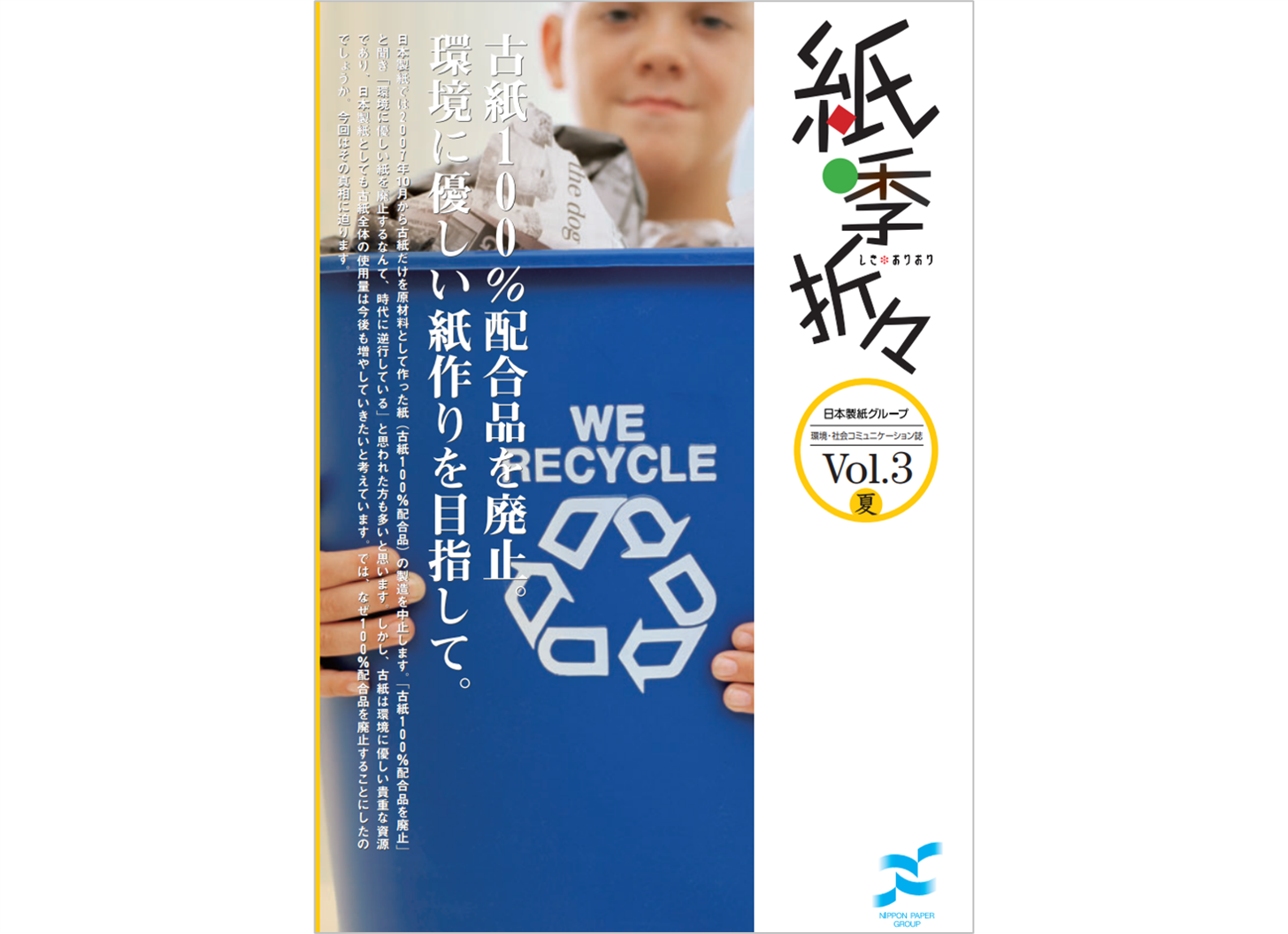
Vol.3 (July 2007)
Main theme
Environmentally friendly paper
Abstract
Nippon Paper Industries ceased production of paper made solely from recycled paper (100% recycled paper) in October 2007. This was a result of our efforts to utilize recycled paper in a way that minimizes environmental impact. Furthermore, Nippon Paper Industries aims to increase the overall amount of recycled paper used. We would like to introduce the environmentally friendly papermaking approach of the Nippon Paper Group.
Paper Talk Guest
Saya Takagi
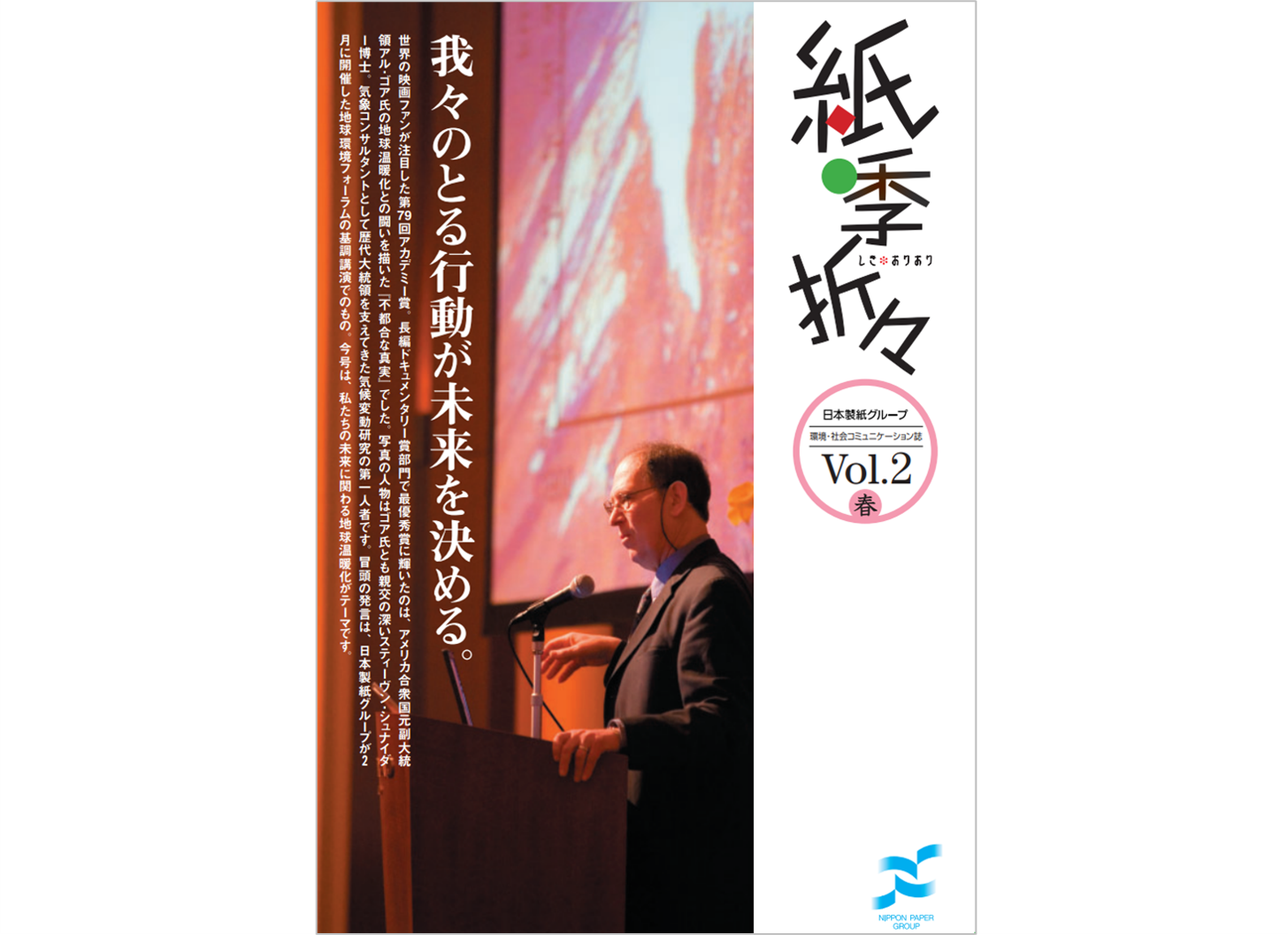
Vol.2 (April 2007)
Main theme
global warming
Abstract
In February 2007, the Nippon Paper Group hosted a global environmental forum, inviting Dr. Steven Schneider, a leading expert in climate change research who has supported successive presidents. The forum featured a discussion with young people who will shape the future about the serious impact of global warming.
Paper Talk Guest
Yaku Mitsuru
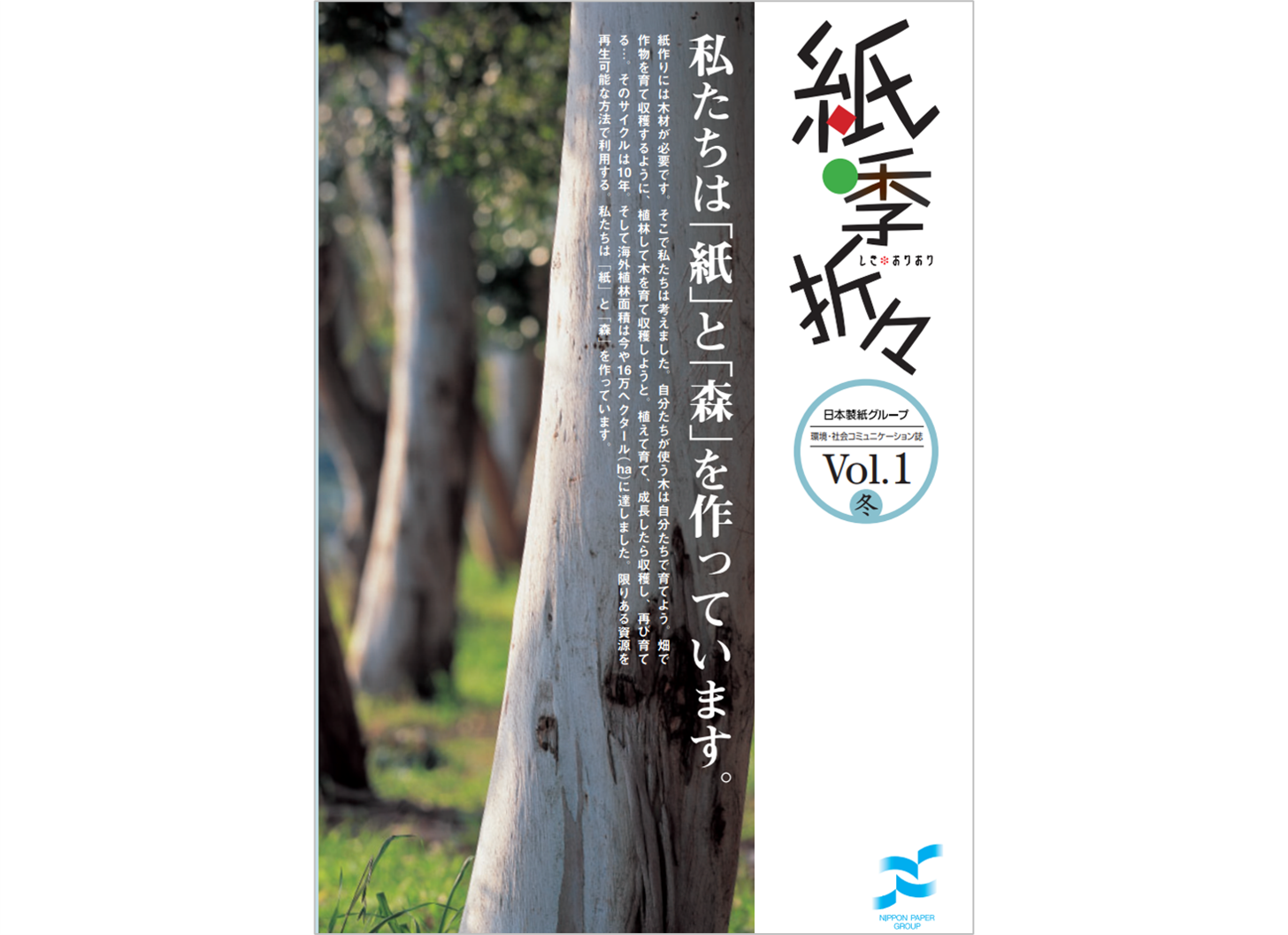
Vol.1 (February 2007)
Main theme
Overseas afforestation
Abstract
Even today, we still hear the misconception that papermaking is a cause of deforestation. Nippon Paper Industries sources raw materials in an environmentally conscious manner, and not only does it not destroy forests through papermaking, but it also creates forests through reforestation activities.
Paper Talk Guest
Kazuyo Matsui

CSR Communication‘Ta-ra’